

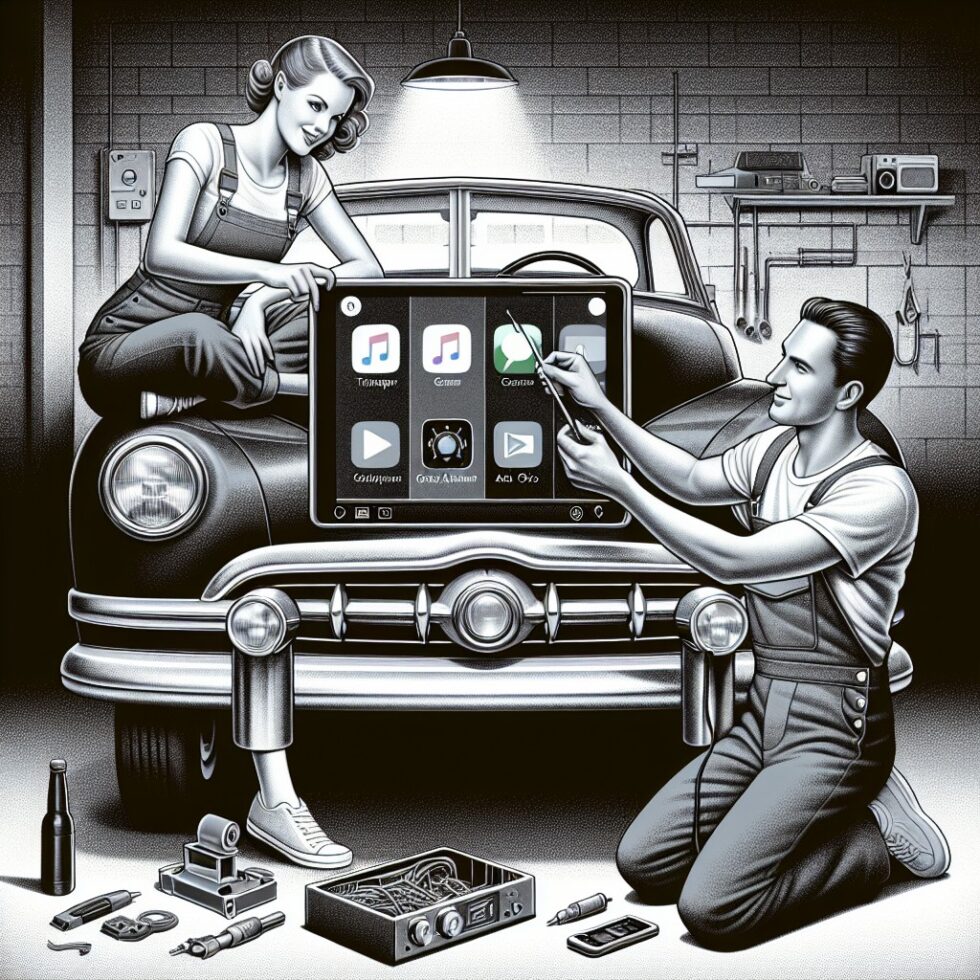
Your car may be older, but your cockpit does not need to be. You can add modern navigation, voice control, streaming audio, and parking aids without buying a new vehicle. The challenge is avoiding messy installs, unreliable wireless, and bad audio. This guide is a practical playbook for everyday drivers and weekend tinkerers. It will walk you through key choices, clean wiring, safe mounting, audio integration, and stable day‑to‑day use.
Start With the Right Approach
There are three main ways to bring modern features to an older car. Your choice sets the tone for the rest of the project, from wiring work to day‑to‑day reliability.
1) Replace the head unit (best full‑feature option)
A double‑DIN or floating‑screen receiver replaces your factory radio and adds CarPlay or Android Auto. This route offers the cleanest interface, native microphone support, and crisp Bluetooth or wired audio. It’s also the most work: you’ll need the correct mounting kit, harness, and sometimes a CAN‑bus adapter for steering wheel controls.
2) Keep the factory unit and add a screen
Standalone displays clip to your dash and talk to your phone. They draw power from a 12V socket and send audio over AUX or a short‑range FM transmitter. The install is faster, but audio quality and boot reliability usually trail a proper head unit. Use this when your factory dash shape is tricky or you’re driving a leased car.
3) Phone‑first, minimal hardware
If you just want better navigation and hands‑free calls, a solid phone mount, a high‑quality USB‑C cable, and a discreet microphone wired into the factory AUX can be enough. It won’t feel fully integrated, but it’s cheap, safe, and simple.
Check Fit, Power, and Interfaces Before You Buy
Do a quick audit of your car. Ten minutes now saves hours later.
Measure your dash
- Double‑DIN vs single‑DIN: Many cars use one of these standardized sizes. Some need a vehicle‑specific kit with brackets and trim.
- Floating screens: These bolt to a single‑DIN chassis but project a large touchscreen in front. Check stalk clearance, HVAC controls, hazard button, and airbag lights.
Identify the harness
- Factory connectors vary by maker and year. Use a plug‑and‑play harness adapter to avoid cutting factory wires.
- If your car has a factory amp, use a harness that breaks out line‑level outputs and a proper amp turn‑on lead.
- For steering wheel buttons, plan a CAN‑bus or data module that maps volume/track controls to the new unit.
Plan for power
- Head units need constant 12V (battery) for memory, switched 12V (ACC) for ignition, and ground. A good harness adapter supplies these safely.
- Add‑on screens usually need only 12V accessory power. Use a hidden hardwire kit with an add‑a‑fuse tap for a clean install, rather than the cigarette lighter.
Audio path sanity check
- If you have premium audio or a factory subwoofer, check whether it uses analog line‑level or digital bus audio. You may need a vehicle‑specific interface to keep it working.
- Confirm there’s an AUX input or plan line‑level injection to avoid lossy FM transmitters.
Wiring That Doesn’t Squeak, Hum, or Fail
Clean wiring makes the difference between a weekend win and a rolling headache. Use new copper wire, proper crimp terminals, and heat‑shrink. Avoid Scotchlok taps and twist‑and‑tape joints.
Power and ground basics
- Keep power and speaker runs separate to cut down on interference.
- Ground noise (that telltale alternator whine) is often a ground loop problem. Ground the head unit to the same point as the factory radio ground, short and tight.
- Use add‑a‑fuse taps on the interior fuse panel for accessory power. Match fuse type (ATO, mini, micro) and rating. Put the new circuit on a lower‑risk slot like a spare outlet or seat heater, not airbags or ABS.
Speakers and line‑level
- When replacing a non‑amplified factory radio, wire speaker outputs directly through the harness adapter. Observe polarity to keep bass in phase.
- With factory amps, use the head unit’s RCA pre‑outs to feed the interface. Avoid double‑amplifying speaker outputs into an existing amp.
Cable routing
- Run the microphone wire up the A‑pillar and along the headliner to the sun visor or rear‑view mirror area.
- Route the GPS puck under the dash top or at the base of the windshield with a clear sky view.
- Leave a service loop behind the unit to avoid strain when you pull it out later.
Audio That Sounds Better Than Stock
Modern head units add clean DACs, time alignment, and parametric EQ—features that, when used well, can make factory speakers sing. A few small steps deliver big gains.
Set gains before EQ
- Start with the head unit volume at ~75% and set pre‑amp output level to avoid clipping. If using an external amp, match its gain to the head unit.
- Use pink noise and a simple RTA app on your phone to identify obvious peaks. Tame those instead of boosting dips.
Use time alignment sparingly
- Measure the distance from your driver’s ear to each speaker. Many units let you enter centimeters or inches and will delay speakers to center the image.
- Small adjustments help; big delays can feel odd for other passengers.
Subwoofer integration if you have one
- Set a crossover around 80 Hz (12 dB/oct) as a starting point.
- Invert sub polarity and pick the setting that subjectively gives tighter, punchier bass at the listening seat.
Remember: less EQ, more placement. A well‑placed microphone and a sealed door panel fix more problems than heavy EQ curves.
Microphone Placement and Voice Reliability
Good voice pickup makes CarPlay and Android Auto feel effortless. The stock little puck mic that ships with most receivers is better than you think—if you mount it right.
Mount where the driver speaks
- Clip it near the rear‑view mirror or visor, pointed at your mouth, away from the window.
- Avoid A‑pillar airbag paths. If in doubt, mount on the headliner instead of drilling plastic trim.
Reduce cabin noise
- Close off unused roof racks and loose trim that create wind noise.
- Use the unit’s noise suppression, but dial it lightly to keep your voice natural.
Backup Cameras and Parking Sensors Without Drama
A clear rear view and guidelines are a huge upgrade to daily driving. Wiring is more approachable than it looks.
Choose your camera
- License‑plate frame cameras are easy and discreet.
- Flush‑mount cameras look OEM but require a clean, rust‑safe hole and grommet.
Trigger and power
- Most head units need a reverse trigger wire to auto‑switch the display. Tap the reverse light’s positive lead in the trunk and run the trigger forward.
- Power the camera from the reverse light circuit so it only draws current in reverse, reducing noise lines across the image.
- If you see flicker, add a small inline filter or use a relay to give the camera a steady 12V.
Run video cleanly
- Route the RCA video cable along the car’s opposite side from main power runs to avoid interference.
- Seal all pass‑throughs with a grommet and silicone to keep water out.
Wired vs Wireless: Make the Right Trade
Wireless CarPlay and Android Auto are convenient, but they add latency, battery draw, and one more radio link that can drop. Wired is still the gold standard for long trips and lossless audio.
Use wired daily if
- You make long drives and want stable nav and calls with no dropouts.
- You care about the best audio path and want your phone charging while using maps.
Go wireless if
- Your commute is short and you value instant connect‑and‑go.
- Your head unit has strong Wi‑Fi and fast boot times (under 10 seconds to connect is a good sign).
Tip: Even on wireless setups, keep a known‑good cable in the glovebox. It’s your rescue option when something misbehaves.
Glare, Heat, and Mounting Safety
Big screens look great in marketing photos. In sunlight and summer heat, the details matter.
Screen and dash fit
- Avoid blocking vents, hazard buttons, and airbags. Check the owner’s manual for airbag locations before mounting anything.
- Pick a matte or low‑gloss screen if possible. Add a simple anti‑glare film if reflections are distracting.
Thermal behavior
- Ensure vents around the unit aren’t sealed off by trim or foam.
- On floating screens, leave clearance above and behind for convection. Hot units crash more often and age faster.
EMI, Bluetooth Quirks, and Alternator Whine
Radio noise and random disconnects can ruin the experience. Most problems have repeatable fixes.
Cut electromagnetic interference (EMI)
- Use ferrite beads on long power and video runs if you see horizontal bars or hear noise when revving.
- Keep power and signal cables at least a few inches apart; cross at 90° if they must touch.
Bluetooth and Wi‑Fi stability
- Update head unit firmware and your phone OS. Many wireless stack fixes arrive quietly.
- Disable auto‑join on slow guest hotspots near your driveway that steal the connection as you start the car.
- If calls sound thin, switch the phone codec priority or force a wired session for that trip.
Defeat alternator whine
- Confirm the ground: short, paint‑free, and to a factory point.
- Use a ground loop isolator only as a last resort; it may reduce dynamic range.
Data, Privacy, and Updates
Infotainment is a tiny computer on your dash. Treat it like one.
Limit what the car stores
- Avoid giving the head unit permanent access to personal contacts if not needed—CarPlay and Android Auto can act as a pass‑through using your phone’s data instead.
- Turn off analytics or “improve product” toggles if present.
Update on your schedule
- Connect the unit to your home Wi‑Fi in the driveway for firmware updates, not your phone hotspot on the road.
- Keep a USB stick with the previous firmware if your model supports manual rollback.
Bench Tests Before the Final Install
Build a quick test rig so you can validate power, boot time, and basic functions on the workbench.
Simple bench power
- Use a regulated 12V supply rated for at least 5A. Connect battery (constant 12V), ACC (switched), and ground as labeled on the harness.
- Boot the unit, pair your phone, and run through maps, voice, and calls for at least 15 minutes.
Checklist before the dash closes
- Head unit boots cleanly and connects within 10–15 seconds.
- Steering wheel controls map correctly and do not conflict with HVAC or trip computer buttons.
- Backup camera switches instantly in reverse, with no rolling bars.
- Music playback is free of hiss, whine, or clicks when accelerating or braking.
Install Day, Step by Step
Plan for daylight, a clean work surface, and the right tools: trim removal set, multimeter, crimpers, heat‑shrink, panel clips, and zip ties.
1) Disconnect the battery
Always pull the negative terminal before touching dash wiring. This protects your car and your new unit.
2) Remove trim and factory radio
Use plastic trim tools to avoid marring panels. Keep screws labeled by panel.
3) Build the harness outside the car
Solder or crimp your harness adapter to the head unit pigtail on the bench. Heat‑shrink every joint. Add the steering wheel control module inline per its diagram.
4) Test fit and route cables
Dry‑fit the mounting kit. Route the microphone, GPS, camera video, and USB extension cables where they will live. Confirm the screen clears shifters and stalks through their full range of motion.
5) Reconnect battery and power on
With everything loosely placed, power up to verify. Fix any errors before final mounting.
6) Final mount and cable management
Use felt tape to stop rattles. Zip‑tie cables to factory looms. Reinstall trim panels in reverse order.
Daily Use Habits That Keep It Reliable
- Use a short, high‑quality USB‑C cable for wired sessions. Long or cheap cables cause random disconnects.
- Clean the screen with a microfiber cloth; harsh cleaners damage oleophobic coatings.
- Every few months, back up your EQ and button mappings if your unit supports profiles.
- If you add a dashcam later, power it from a separate fused circuit to avoid adding noise to the head unit feed.
Troubleshooting Without Guesswork
Symptom: Wireless connects, then drops
- Update firmware and phone OS; clear Bluetooth and Wi‑Fi profiles and re‑pair.
- Disable battery optimization on your phone for the Auto/CarPlay app component.
- Try 5 GHz if the unit supports it; 2.4 GHz is often busy near crowded parking lots.
Symptom: No sound, but the UI works
- Check if the unit is set to “pre‑out” mode with no internal amp (common on some models). Re‑enable speaker outputs or use the proper RCAs to feed your factory amp.
- Verify the amp remote turn‑on wire (often blue/white) is connected and seeing 12V with the unit on.
Symptom: Camera image is black or grainy
- Confirm reverse trigger voltage at the head unit when in reverse.
- Test the camera on a bench supply to rule out a bad unit.
- Replace long, thin RCA runs with a shielded cable; add a small filter if powered from the reverse light.
What to Skip (It Looks Cool, But…)
- FM transmitters for daily audio. They’re noisy and drift. Use AUX, Bluetooth, or line‑level.
- Stacked adapters for steering wheel controls. One high‑quality module beats two chained gadgets.
- Hard‑mounting to airbag covers. Never block or bolt to any panel with SRS markings.
Future‑Proofing Without Overbuying
Pick features that will still feel good in five years without chasing every spec.
- Fast boot: Units that reach the home screen in under 8–10 seconds feel modern every day.
- USB‑C with at least 2.4A: Keeps phones charged while navigating.
- Dual Bluetooth radios or strong Wi‑Fi: Stable wireless sessions and quick pairing.
- DSP basics: Time alignment and parametric EQ provide real, lasting improvements.
- Modular camera inputs: Add front or side cameras later without a full reinstall.
Safety First, Always
Retrofitting is fun, but your car’s safety systems come first.
- Never tap into airbag, ABS, or power steering circuits. Use a proper fused add‑a‑circuit on low‑risk slots.
- Keep wiring away from pedal boxes and steering shafts. Tie and trim everything.
- Test the horn, hazards, and airbags indicator after reassembly. If any warning lights appear, stop and resolve before driving.
Summary:
- Pick your path: new head unit for full features, add‑on screen for quick wins, or phone‑first for simplicity.
- Confirm fit, harness, and amp details before buying. Use adapters to avoid cutting factory wires.
- Do clean wiring with solid grounds, separated signal/power runs, and heat‑shrinked joints.
- Tune audio the right way: set gains, lightly EQ, and use time alignment for a centered image.
- Mount the mic near the visor or mirror and manage cabin noise for clear voice control.
- Wire cameras with proper reverse triggers and shielded video runs to prevent flicker.
- Choose wired for stability and audio quality; go wireless for short, convenient trips.
- Fight EMI, BT quirks, and whine with updates, ferrites, and proper grounding.
- Bench‑test before final install, and keep a cable handy for on‑the‑road recovery.
- Protect privacy, schedule updates at home, and never compromise safety systems.