

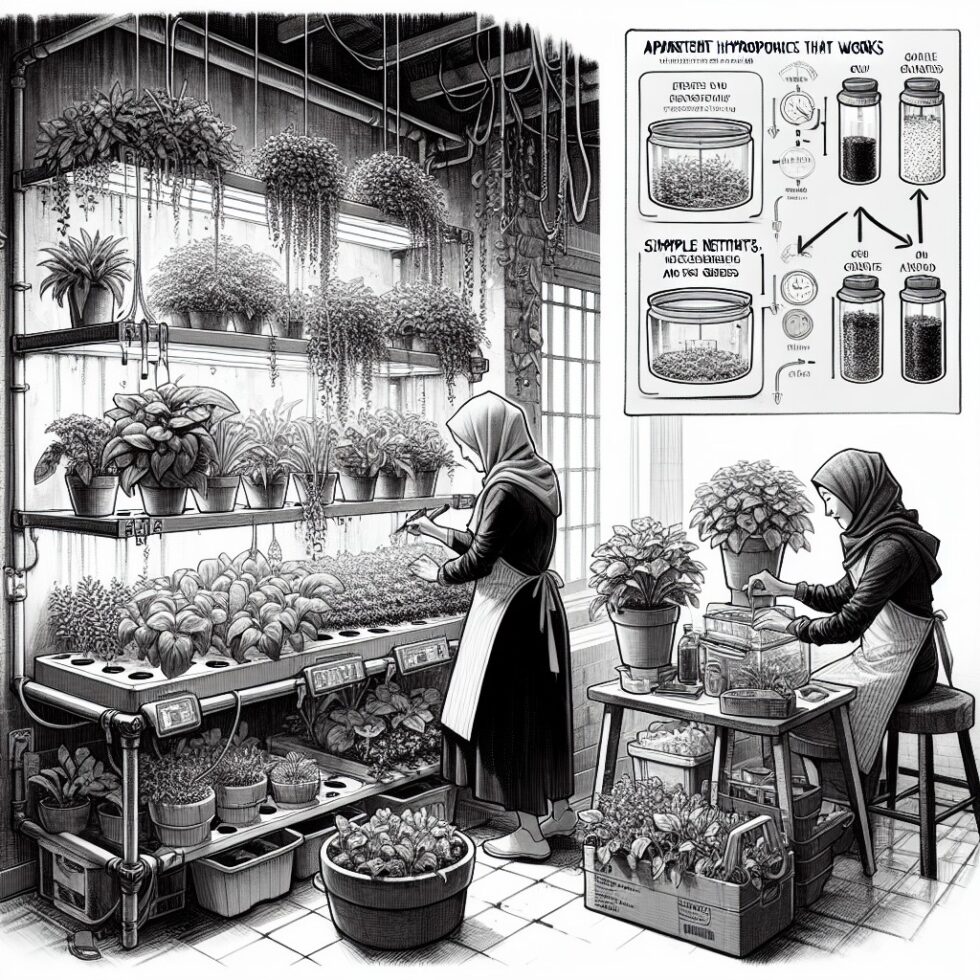
Why Hydroponics Belongs in Small Homes
Leafy greens are expensive, travel far, and wilt fast. Hydroponics lets you grow fresh, clean produce in a corner of your apartment with light, water, and nutrients—no soil. You can start with one tote and a clip-on light. Within a month you’ll harvest salad that tastes like the garden, even if you don’t have one.
This guide focuses on what works in tight spaces: layouts that don’t leak, nutrients that don’t confuse, and simple sensors that help you keep plants healthy without turning your living room into a lab.
Hydroponics in One Page
Hydroponics grows plants in water fortified with minerals. Roots sit in a solution with oxygen. Shoots see light. If you maintain pH, nutrient strength, light, and temperature, plants reward you with fast growth and clean harvests.
Methods that suit apartments
- Kratky (passive): A light-proof bin with net pots and nutrient solution. No pumps. As plants drink, an air gap forms for roots to breathe. Best for small herbs and lettuce. Very quiet.
- DWC (deep water culture): Like Kratky but with an air pump and stone to oxygenate water. Faster growth. A small hum from the pump.
- Wick: A wick draws solution up into the media. Limit to herbs; slower but ultra simple.
Skip complex systems (NFT, ebb-and-flow) until you’ve harvested a few cycles. Simpler setups are easier to trust in a rental.
Light That Plants Understand
Light is the engine of growth. Forget lumens. Plants care about PPFD (photosynthetic photon flux density, μmol/m²/s) and DLI (daily light integral, mol/m²/day).
Targets for greens and herbs
- Lettuce and baby greens: PPFD 150–250 μmol/m²/s for 14–16 hours. DLI ~12–17 mol/m²/day.
- Basil, mint, cilantro: PPFD 200–350 μmol/m²/s for 14–16 hours. DLI ~15–20 mol/m²/day.
You don’t need a fancy meter to start. Many 100–150 W “full spectrum” LED panels at 30–45 cm above the canopy deliver enough light over 60 × 60 cm. Use a digital timer set to 16 hours on, 8 off. Keep lights at a height where leaves don’t bleach (too close) or stretch (too far).
Heat, noise, and light spill
- Choose LED bars or panels with passive cooling or a quiet fan.
- Use reflective side panels to keep light off your eyes and walls.
- Keep leaf temperature near room temperature (18–24°C).
Tip: App-controlled smart plugs are convenient, but a basic mechanical timer is robust and immune to Wi‑Fi glitches.
Nutrient Solution Without the Chemistry Exam
Plants need macronutrients (N, P, K, Ca, Mg, S) and trace elements (Fe, Mn, Zn, Cu, B, Mo). Commercial hydroponic blends supply these. For a small home system, two- or three-part liquids are easiest.
Mixing basics
- Start with clean, low-mineral water. Reverse osmosis (RO) or distilled makes mixing predictable. If using tap water, know its hardness.
- Measure EC (electrical conductivity) or TDS. For leafy greens, target EC 1.0–1.6 mS/cm (about 500–800 ppm NaCl scale).
- Keep pH at 5.8–6.2. Use pH down (phosphoric acid) or up (potassium hydroxide) sparingly.
- Add part A, then part B. Never mix concentrates together undiluted.
A simple handheld pH pen and EC/TDS meter are worth it. Calibrate monthly. If you’d like to go even simpler, follow your nutrient label’s lettuce mix and adjust pH with a drop kit until the solution is near 6.0.
Temperature and oxygen
- Keep solution 18–22°C. Warmer water carries less oxygen and encourages pathogens.
- In DWC, run an air pump 24/7 with a ceramic air stone. In Kratky, leave an air gap below the net pots.
Warning: Do not use additives that promise miracles. Most cause instability or biofilm. Stick to nutrients, pH control, and occasional hydrogen peroxide for cleaning.
Containers, Media, and Root Health
Use food-safe, opaque containers. Light leaks grow algae; algae compete for oxygen.
Good choices
- Reservoir: Black storage tote with a gasketed lid or a purpose-built hydro bucket. 30–60 L is a sweet spot.
- Net pots: 2–3 inch for lettuce, 3–4 inch for herbs.
- Media: Rockwool cubes to germinate; expanded clay (hydroton) around roots in the pot. Coco chips also work.
- Air hardware (DWC): Quiet pump on vibration pads, check valve in the airline, fine-pore air stone.
Keep roots white to tan, crisp, and earthy-smelling. Brown, mushy roots with a sour odor mean low oxygen, warm solution, or contamination. Change the solution, scrub with peroxide, and add aeration.
Layout That Fits a Rental
You can tuck a hydroponic corner onto a wire shelf, in a laundry room, or near a window (for space, not for light). The key is containment and quiet operation.
Minimalist rack
- Chrome wire shelf, 90 cm wide.
- Two LED bars under the top shelf, clamped or zip-tied.
- Reservoir on the second shelf, drip tray beneath.
- Power strip with GFCI protection and a timer mounted high, with drip loops.
Place the air pump above the water line to prevent backflow. If you must put it below, install a check valve. Avoid drilling into walls in rentals by using snap-on reflectors or blackout curtains on the rack sides.
Simple Sensors and What to Watch
You do not need a dashboard app to grow lettuce. You need a few basic readings and a routine.
- pH pen: Check after mixing, then every few days.
- EC meter: Check weekly; top off with water (not nutrients) when EC creeps up.
- Thermometer: One for room air and one probe for solution. Keep solution cooler than the room.
- Timer: Reliable photoperiod, 14–16 hours light for greens.
If you love tinkering, a small microcontroller can control lights and log temperature. Keep it offline for reliability and safety. An automatic top-off bottle with a float valve is a low-risk upgrade that prevents swings in EC and pH.
Seed to Salad: A Clear Routine
Germination
- Soak rockwool cubes in pH 5.8 water for 15 minutes.
- Drop 2–3 seeds per cube. Keep moist but not dripping. 20–22°C works for most greens.
- As soon as you see cotyledons (first leaves), give low light for 16 hours daily.
Transplant
- When roots peek from the cube, nest the cube into a net pot with hydroton.
- Set the net pot so the lower 1–2 cm contacts the solution; in DWC, bubbling splashes the base to keep it moist.
Grow
- Check pH every 2–3 days. Adjust gently.
- Top off with water as needed. If EC falls quickly, your plants are eating—consider a slightly stronger mix next change.
- Maintain steady light height. Raise the fixture as the canopy rises.
Harvest
- Loose-leaf greens: Cut outer leaves, leaving the center to regrow for weeks.
- Head lettuce: Harvest whole head at 30–45 days, depending on variety and light.
- Herbs: Pinch tops to encourage bushy growth and prevent flowering.
Sanitize between crops: drain, rinse, then scrub the reservoir and parts with a dilute hydrogen peroxide solution. Rinse with clean water before refilling.
What to Grow in Tight Spaces
- Lettuce: ‘Buttercrunch’, ‘Green Star’, ‘Rouxai’, ‘Little Gem’ romaine mini-heads.
- Asian greens: Mizuna, tatsoi, bok choy baby varieties.
- Herbs: Basil (Genovese, Thai), mint, cilantro, dill. Cilantro prefers cooler solutions.
- Microgreens: Radish, broccoli, pea shoots—grown on trays with pads, harvested in 10–14 days.
Skip fruiting crops at first. Tomatoes and peppers need higher light, more space, and pruning. Strawberries can work in small towers, but they complicate sanitation and pest control.
Food Safety in a Living Room Garden
Hydroponics can be very clean, but it is not sterile. Adopt a simple, repeatable hygiene routine:
- Hands and tools: Wash hands. Use clean scissors. Keep animals away from the grow area.
- Water: Prefer RO or distilled. If using municipal water with chloramine, activated carbon filters help.
- Temperature: Keep solution below 22°C to discourage pathogens.
- Rinse produce under cool running water. No soaps.
If you see slime, smell sourness, or notice off flavors, pause harvesting from that reservoir, clean, and reset. Your senses are reliable early warnings.
Pests, Algae, and Other Annoyances
- Fungus gnats: Sticky yellow cards catch adults. Avoid over-wet media. A layer of hydroton discourages laying eggs.
- Algae: Block light from the solution. Tape seams. Use opaque lids and net pot covers.
- Tip burn in lettuce: Often from low calcium supply under high light and heat. Lower light a bit, boost airflow, and ensure steady EC and solution temperature.
Use mechanical and cultural controls first. Sprays are rarely needed for leafy greens indoors if you keep a clean, closed setup.
Costs, Yields, and Realistic Expectations
Power
A 120 W LED running 16 hours/day uses about 1.9 kWh/day. At $0.15/kWh, that’s ~$8.50/month. Air pumps add pennies. In cool months, the light’s heat can offset room heating slightly; in summer, it adds to AC load.
Supplies
- Nutrient concentrate: $15–25 per liter. At lettuce strength, ~10–15 cents per plant per cycle.
- Media: Rockwool cubes ~25–40 cents each. Hydroton is reusable.
- Meters: pH pen $15–60, EC meter $15–50. Replace probe or pen every 1–2 years depending on quality.
Yield
In a 60 × 60 cm area, you can grow 9–16 heads of lettuce or a continuous harvest of mixed greens, about 0.8–1.5 kg per week once dialed in. Herbs are denser in value; a basil canopy can replace frequent store purchases.
ROI depends on your grocery prices and habits. Many people reach cost parity in 6–10 months, faster if you already own a shelf and use an affordable light.
Quiet, Cool, and Spill-Free
- Noise: Put the air pump on a soft pad, not directly on the shelf. Silicone tubing damps vibration.
- Heat: Choose LED fixtures with good heat sinks. Keep some space above for airflow.
- Spills: Use a cafeteria tray or boot tray under the reservoir. Add quick-connect fittings for hoses. Label power cords and make drip loops.
Don’t plumb into building water lines. Use gravity-fed top-off or hand top-offs to stay landlord-friendly.
Small Automation That Pays Off
The safest upgrades are the boring ones: timers, float valves, and level sensors.
- Timer for lights with 7-day scheduling if you want weekend tweaks.
- Top-off reservoir that feeds via float valve. Use RO water. Keeps EC and pH more stable.
- Float switch to cut the air pump if water drops too low (protects the pump and prevents noise).
Advanced: peristaltic pumps can dose pH up/down, but add risk if misconfigured. If you try this, use wide deadbands (e.g., allow pH 5.7–6.3), maximum dose limits, and physical separation of acids and bases. Keep it offline and supervised.
Three Builds That Work
The silent salad bin (Kratky)
- 30–50 L black storage tote with gasket lid.
- 9 net pots in a 3×3 pattern with 10–12 cm spacing.
- 100–120 W LED panel above, 30–35 cm away.
- Mix nutrients to EC 1.2, pH 5.9. Fill so cubes just touch.
Harvest heads in 30–40 days. No pumps, minimal maintenance. Refill between runs.
The rapid rack (DWC)
- 60 L reservoir, small air pump, ceramic stone.
- 12 net pots at 12–15 cm spacing for cut-and-come-again greens.
- Two 80–100 W LED bars for even coverage.
Weekly checks. Top off with RO water. Change solution every 2–3 weeks or when EC and pH drift.
The herb rail
- Narrow 10–15 L reservoir on a windowsill (for space only).
- Six 3-inch net pots, DWC with a micro air pump.
- Slim LED strip with reflector to cut glare.
Great for basil, mint, and dill. Pinch weekly to keep plants compact.
Routine: The Five-Minute Daily Check
- Look at leaves: color, turgor, edges. Droopy or pale? Check water level and light height.
- Peek at roots: white to tan and firm. Any slime or smell? Plan a clean.
- Finger test solution temp: should feel cool, not warm. Verify with a thermometer later.
- Glance at pH/EC logs: any sudden changes? Top off or adjust.
- Check timers and airflow: lights on schedule, no blocked vents.
This tiny habit prevents 90% of problems. Plants repay attention with reliability.
Troubleshooting by Symptom
- Yellow new growth: Likely iron deficiency at high pH. Lower pH to 5.8–6.0. Ensure your nutrients include chelated iron.
- Leaf edges crisping: Tip burn. Reduce PPFD slightly, improve airflow, check EC (too high), keep solution cool.
- Stretching, weak stems: Light too far or insufficient intensity. Lower the fixture or increase power.
- Slow growth: Cold room, low PPFD, or insufficient nutrients. Check EC and solution temperature.
- Brown roots: Warm, low-oxygen solution. Increase aeration (DWC), lower temperature, and sanitize.
Water Use and Disposal
Hydroponics uses less water than soil, but you will change solutions. Pour small volumes onto non-edible ornamental plants or a gravel area, not storm drains. Avoid dumping large volumes with high nutrient loads into municipal systems frequently. Check building rules; when in doubt, dilute before disposal.
Scaling Without Stress
After a few cycles, consider adding a second bin with a different photoperiod or nutrient strength: one for fast-turn salad, one for herbs. You can also try microgreens on a tray for quick weekly harvests. Swap harvests with neighbors to increase variety.
Keep your system modular. Multiple small reservoirs are easier to clean and isolate than one giant tank. Redundancy matters more than fancy gear.
Summary:
- Start simple with Kratky or DWC in opaque, food-safe containers.
- For greens, target PPFD 150–250 and a 14–16 hour photoperiod.
- Mix nutrients to EC 1.0–1.6 mS/cm, pH 5.8–6.2, with cool solution temps.
- Use basic sensors: pH pen, EC meter, and thermometers. A timer is essential.
- Control light spill and noise with reflectors, soft mounts, and good fixtures.
- Adopt a five-minute daily check. Sanitize between runs for food safety.
- Choose lettuce, Asian greens, and herbs first; skip fruiting crops until later.
- Automate low-risk tasks: lights, top-offs, and level safeties. Keep systems offline and simple.
- Dispose of nutrient solution responsibly; keep your setup modular and clean.