

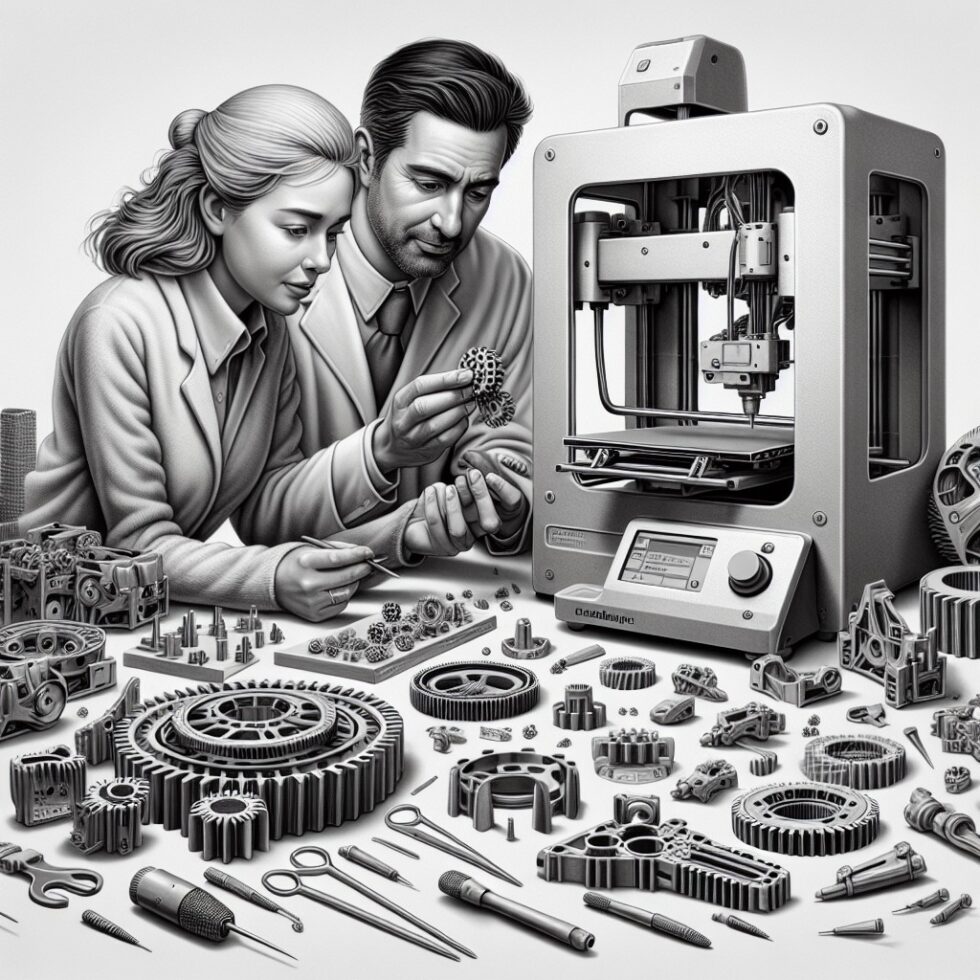
Why Small-Batch Resin 3D Printing Is Worth Your Time
Desktop resin printers are no longer just for hobby miniatures. With the right materials and process, they can produce sellable parts with crisp detail, smooth surfaces, and consistent dimensions at a price that makes sense. Think custom bike parts, camera accessories, props, jigs, hearing aid shells, sensor brackets, or short-run enclosures. You do not need a lab, a warehouse, or a full-time crew. You need a printer that works, a sane workflow, and a way to keep quality steady.
This article is a practical guide to making repeatable small batches on MSLA printers (masked stereolithography). We will cover material selection, design for resin, post-processing that scales, quality checks you can actually do, cost math, and a few ways to move beyond direct prints when you need more durability or volume.
Pick Materials and Machines That Survive Real Use
Choose resins for the job, not just for looks
Resin prints can be fragile or durable depending on what you buy and how you cure. Start with a clear idea of what your part must survive:
- Tough/ABS-like resins: Good general-purpose option for clips, small enclosures, adapters. They flex a bit before breaking.
- Engineering blends: Nylon-reinforced or “pro” mixes resist creep, wear, and heat better. Use for load-bearing parts or fixtures.
- High-temp resins: Useful for soldering jigs, under-hood prototypes, or molds. They cost more and often need longer post-cures.
- Flexible resins: Gaskets, vibration isolation, or snap-on dust covers. Design for thicker sections to avoid tearing.
- Water-washable resins: Convenient, but not water-disposable. You still must cure and dispose of waste responsibly.
Buy a few liters of the same resin once you find a fit. Lot-to-lot variation is real. Track lot numbers. If you switch brands, expect to recalibrate exposure and supports.
Printer features that matter for production
Production is about uptime and manageable costs. Look for:
- Monochrome 4K/8K LCD: Faster exposures and longer screen life than older RGB panels.
- Easy-to-level build plate: A rigid plate with rock-solid leveling saves you from failed first layers.
- Replaceable FEP or nFEP film: Keep spares. A scratched or cloudy film causes adhesion issues and surface defects.
- Stable Z-axis: A stout linear rail reduces banding and layer shifting in tall prints.
- Open material ecosystem: Avoid lock-in. The freedom to pick resins and tune is essential for cost and performance.
One big printer is not always better than two smaller ones. Two machines can give you redundancy, a way to run different resins in parallel, and an extra plate ready to load while the other prints.
Safety gear and workspace setup
Liquid resin is a skin sensitizer and a lung hazard when aerosolized. Treat your space like a real workshop:
- Ventilation: Keep a fan drawing air outward. Place curing units away from your desk.
- PPE: Wear nitrile gloves and safety glasses. Use splash protection when pouring. For sanding or cutting cured resin, wear a dust mask or respirator and capture dust.
- Waste handling: Cure paper towels, gloves, and any resin-contaminated items before disposal. Cure used IPA or TPM sediments, then dispose per local rules.
- Spill plan: Keep disposable pads and a UV flashlight handy to harden spills. Label containers clearly.
Design Parts That Print Cleanly and Assemble Without Drama
Basics that prevent rework
Resin can do sharp details and smooth surfaces, but it needs the right geometry:
- Wall thickness: Keep thin walls >1.2 mm for tough resins and >2 mm for flexible materials unless you know your limits.
- Drain holes: Hollow parts need venting to prevent suction and trapped resin. Two holes minimum. Design them where they will be hidden or plugged.
- Fillets and chamfers: Ease edges to reduce stress concentrations and make parts feel finished.
- Threading: Prefer metal inserts or thread-forming screws. Printed threads are okay for light use but wear quickly.
Orientation and support choices
Orientation changes everything: surface quality, peel forces, and support scars.
- Angle critical surfaces: Avoid flat-on-plate top faces if you care about gloss. A 20–30° tilt reduces suction and improves finish.
- Support placement: Put large supports on hidden faces. Use medium tips to avoid divots. For fragile features, add manual supports.
- Common support trees: For batch plates, share supports between mirrored parts. This speeds removal and saves resin.
Design for small-batch flow
Parts that are easy to handle get out the door faster:
- Batch tabs: Add a small sacrificial tab with a hole to hang parts during drying and curing.
- Assembly indices: Add tiny alignment keys, snapped rails, or embossed markers to reduce assembly errors.
- Embedded IDs: Engrave a quiet location with model version and batch code. Future-you will thank you.
A Repeatable Workflow From Print to Ship
Slicing presets you can trust
Save a preset for each resin with layer height, exposure times, lift speeds, and support settings. Calibrate with a known test like AmeraLabs town or your own dimensional coupon. Document the build plate layout. If your slicer allows, script plate duplication to fill capacity while keeping part spacing for drain and wash flow.
Washing that actually cleans
Uncured resin lingers in crevices and weeps out later if you rush. A simple but effective wash protocol:
- Two-stage wash: 3–5 minutes in “dirty” solvent to knock off bulk resin, then 1–2 minutes in “clean” solvent. Agitate gently.
- Rotate and refresh: When “clean” turns cloudy, swap it to “dirty” and add fresh clean solvent. This extends solvent life.
- Ultrasonic assist: For intricate parts, a brief ultrasonic dip can help. Keep times short to avoid embrittlement.
- Dry completely: Evaporate solvent before curing. A warm air blast or dehumidified room speeds this up.
Post-cure for strength and stability
Fully cured resin performs better. Control three variables:
- Light: Use the wavelength your resin expects (usually 405 nm). A purpose-built curing station beats a DIY box in consistency.
- Time: Avoid both under- and over-cure. Set a baseline from the datasheet, then adjust based on brittleness tests.
- Heat: Some resins require heat during cure to achieve full properties. 50–60°C for 20–30 minutes is common. Test for warping on thin parts.
To get glossy surfaces, cure in a low-oxygen environment: submerged in water or in a nitrogen-purged chamber. This reduces tack and surface haze on clear resins.
Finishing that scales beyond one-off
Choose finishes you can repeat in batches:
- Support removal: Snip close, then scrape with a sharp chisel. Sand lightly with 400–800 grit to blend marks.
- Priming and paint: Use a filler primer for seamless surfaces. For color-coded functional parts, satin paints hide minor defects better than glossy.
- Clear coat: A UV-blocking clear coat helps resist yellowing outdoors. Test adhesion on your resin and finish stack.
- Threaded inserts: Heat-set inserts are tricky in resin. Consider press-in or adhesive-bonded brass inserts with precise pilot holes.
Quality checks without a metrology lab
You do not need a CMM to ship consistent parts. Build a lightweight QA routine:
- Dimensional coupon: Print a small test piece with known dimensions on each plate. Measure X/Y/Z with calipers and log the results.
- Go/no-go gauges: Print simple gauges to check critical fits quickly (snap, slide, twist).
- Functional test: Assemble one sample per plate. Verify mating with the intended hardware or device.
- Visual standard: Keep a “golden” sample for comparison under neutral lighting.
Resin care and consistency
Resin chemistry is sensitive to temperature and contamination:
- Mix before pouring: Pigments settle. Stir or gently shake sealed bottles.
- Warm to spec: Cold resin is viscous and under-exposes. Keep the room in the recommended range, often 20–25°C.
- Filter between runs: Use paint strainers to remove cured flecks. Store resin in amber containers away from light.
Know Your Costs and Throughput
Cost components you can track
Price your parts with a simple model so you know when to accept orders and when to say no:
- Resin: Cost per milliliter times part volume plus supports. Add a 10–15% waste factor.
- Film and screens: Estimate a per-part cost for FEP/nFEP film and LCD wear. A screen might last 1,000–2,000 hours; divide replacement cost by the expected number of prints.
- Solvent: Allocate by liters used per month. Reuse extends life; still budget for regular refresh.
- Consumables: Gloves, strainers, sandpaper, paint, labels, bags, and silica gel packs.
- Labor: Actual time spent per batch: prep, wash, cure, finish, pack. Be honest; time is real cost.
- Overhead: Electricity, space, equipment depreciation, and shipping materials.
Throughput math that avoids overtime
Break down your day into cycles:
- Print time: Layers × exposure + lifts. Tall parts dominate time; pack short parts together.
- Parallelization: Stagger multiple printers so you are not washing three plates at once.
- Dry and cure: Set racks and timers. Use batch tags to avoid mixing parts.
- Takt time: How often a finished part leaves the line. If you ship 50 parts per day, each station must keep pace.
Small improvements, like pre-cut labels or pre-sorted hardware kits, often add more throughput than buying a faster printer.
Go Beyond Direct Prints: Molds, Casting, and Inserts
Resin as a master for silicone molds
When you need dozens to hundreds of identical parts, print a smooth master and cast in urethane. The steps:
- Print a pristine master: Sand and prime to a Class-A surface if needed.
- Build a mold box: Enclose with proper draft and parting lines.
- Pour silicone: Degas if possible for bubble-free molds.
- Cast urethane: Choose Shore hardness to match your use. Pigment as needed.
Urethane parts can beat direct prints in toughness and UV stability, and mold life can reach dozens of casts with the right silicone and release.
Design for inserts and magnets
Add features that expand function:
- Magnet pockets: Undersize slightly and bond with epoxy. Seal in a final cure.
- Press-fit pins: Provide chamfers and controlled interference. Test on your material stack.
- Adhesive joints: Roughen bonding surfaces and wipe with solvent before applying epoxy or cyanoacrylate.
Reliability Systems: Logs, Jigs, and Pack-Out
Batch logs
Keep a simple log for each plate: date, resin type and lot, exposure, layer height, printer ID, wash times, cure times, and notes on defects. Add a tiny batch ID to the part or packaging. If a customer writes, you can trace and correct.
Jigs and fixtures
Make your own low-cost aids:
- Support removal cradles: Hold the part at the right angle and height for safe trimming.
- Drill guides: For inserts or post-drilled features, printed drill jigs ensure repeatability.
- Spray stands: Rack parts for painting in one go. Keep spacing consistent to avoid dust and runs.
Packaging matters
Protect your work in transit:
- Surface protection: Use soft pouches or tissue to prevent rub marks.
- Moisture and UV: Add a small silica gel pack and use opaque or UV-blocking bags for long-haul shipments.
- Instructions: Include a care card with cleaning tips and contact info.
Debug Fast: Common Failures and Fixes
First-layer failures
If parts do not stick to the plate or detach mid-print:
- Re-level and clean: Check plate flatness and tighten. Clean plate, vat film, and glass.
- Boost bottom exposure: Increase initial layer exposure and count slightly.
- Check temperature: Cold resin needs more exposure. Warm the room or resin.
Surface defects and delamination
Lines, ripples, or layers separating often point to:
- Underexposure: Increase normal exposure in small steps.
- Dirty solvent: Rewash in clean solvent and improve your rotation schedule.
- Cloudy FEP: Replace film if it shows haze or scratches.
Brittleness after cure
Parts that crack easily may be overcured or cured too hot. Reduce cure time/temperature, or try a tougher resin. For flexible resins, long cures can stiffen beyond spec.
When to Switch Processes
Resin printing excels at fine detail, smooth finishes, and complex shapes at low volumes. It is less efficient for giant parts or thousands of copies. Consider switching when:
- Volume > 500–1,000 units: Silicone molding or injection molding becomes cost-effective.
- Outdoor durability: SLS nylon or urethane offers better UV and mechanical resilience without coatings.
- Large structural parts: FDM or CNC may be stronger per dollar.
Do not hesitate to quote both direct print and cast/injection options. Customers often pick the blend of price, speed, and durability that fits their needs.
Case Study Flow: A Camera Accessory Bracket
Requirements
Small bracket to mount a cold shoe to a cage. Must hold 400 g, withstand light knocks, and look professional. Small runs of 40 per week.
Material and machine
Tough, black “ABS-like” resin on a mono 4K printer. 0.05 mm layers. Two printers in parallel. Batch plate holds eight brackets and two dimensional coupons.
Design choices
- 2.5 mm wall thickness, 1 mm fillets on edges.
- Two drain holes under a cosmetic cap.
- Brass press-in inserts for threaded holes.
Workflow
- Print time: 2 hours, 15 minutes per plate.
- Wash: 4 minutes dirty, 1 minute clean, compressed air dry.
- Cure: 20 minutes at 405 nm with gentle heat.
- Finish: Sand support marks, satin black paint, UV clear coat.
- QA: Check hole spacing with go/no-go gauge, assemble one bracket per plate.
- Pack: Foam-lined box, silica gel, care card.
Cost snapshot (per bracket)
- Resin: $0.85
- Consumables: $0.30
- Film/screen allocation: $0.10
- Labor: $2.20
- Overhead: $0.25
- Total: ~$3.70
Sell at $14–$19 retail with room for promos and wholesale. If volume doubles, consider a silicone mold and urethane casting to reduce labor.
Simple Upgrades That Punch Above Their Weight
- Second build plate: Prep a fresh plate while the other prints. Cuts downtime.
- Parts racks: Create drying and curing racks that fit your parts. Reduced handling equals fewer blemishes.
- Lighting: Neutral CRI 90+ task lights for finishing and QA catch defects earlier.
- Label printer: Generate batch IDs and QR codes linking to your log.
- Dedicated finishing area: Keep dust away from wash and cure zones.
FAQ: Quick Answers to Common Questions
How do I avoid yellowing on clear parts?
Use a resin formulated for clarity, cure submerged or in inert gas for better surfaces, and finish with a UV-blocking clear coat. Store and ship in opaque packaging.
Can I ship water-washable resin parts for outdoor use?
You can, but expect more UV and moisture sensitivity. Prefer engineering resins or urethane casting for long-term outdoor exposure.
What about odor?
Some resins are low-odor, but good ventilation is still essential. Keep lids closed, and store resin in sealed containers.
Putting It All Together
The magic of small-batch resin printing is not a secret filament or a fancy slicer trick. It is a clean, repeatable process from CAD to pack-out. Start with a resin that matches the job, design for support and drain, build a repeatable wash and cure routine, and create a few simple gauges. Track your batches and costs, and make small improvements each week. You will go from “neat prototype” to real product faster than you expect.
Summary:
- Pick resins for real-world demands: toughness, heat, flexibility, and UV resistance.
- Choose printers for uptime: mono LCDs, solid Z-axes, replaceable films, open materials.
- Design for resin: adequate wall thickness, drain holes, smart orientation and supports.
- Use a two-stage wash, full dry, and controlled cure for strength and finish.
- Standardize finishing: predictable support removal, primers, paints, and clear coats.
- Build lightweight QA: dimensional coupons, go/no-go gauges, functional samples.
- Track costs honestly and plan throughput with simple takt-time thinking.
- Scale with molds and inserts when volume or durability demands it.
- Keep logs, use jigs, and pack with UV/moisture protection for fewer returns.
- Debug fast with exposure, cleanliness, and film checks as your first steps.