

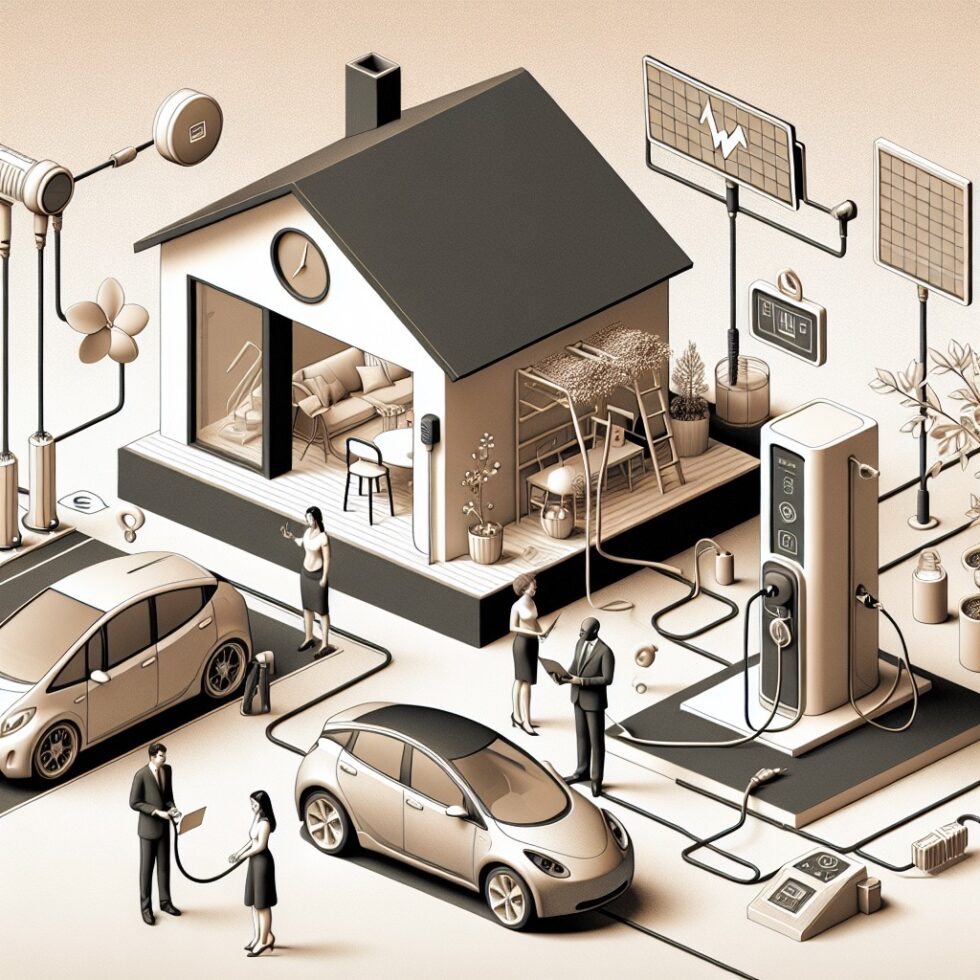
Why using your EV for power makes sense now
Electric vehicles are energy storage on wheels. A mid‑size EV often carries 50–100 kWh of usable battery — more than many standalone home batteries. You can tap that energy in three ways: V2L (vehicle‑to‑load) outlets for tools and appliances, V2H (vehicle‑to‑home) for whole‑home backup, and V2G (vehicle‑to‑grid) for utility programs that pay you to support the grid.
These options are no longer experimental. Major automakers ship cars with built‑in outlets or bi‑directional charging support. Utilities run pilots for demand response. Standards like ISO 15118‑20, SAE J3072, and UL 9741 define how vehicles, chargers, and homes should behave. If you’re considering a home battery or a generator, it’s time to evaluate your EV as a power source too.
This guide keeps the jargon light and focuses on safe, practical setups you can use at home. You’ll learn what equipment you need, how to plan essential loads, and the do’s and don’ts that prevent costly mistakes.
Understand the three modes: V2L, V2H, and V2G
V2L: vehicle outlets for appliances
What it is: Many EVs offer on‑board AC outlets or an accessory adapter. You plug appliances directly into the car. Common ratings are 1.5–3.6 kW at 120 V in North America and 230 V in many other regions.
- Good for: Fridges, sump pumps, routers, phones, power tools, small space heaters (careful with continuous loads).
- Pros: Simple, no electrician required, portable for job sites or camping, works during outages.
- Cons: You must run extension cords and manage loads manually; no automatic transfer for your house circuits.
How to do it well: Use heavy‑gauge extension cords (12 AWG or better), avoid daisy chaining power strips, and keep the EV in a ventilated area. Set a state‑of‑charge (SoC) floor in the car if available, so you don’t drain below your mobility needs.
V2H: whole‑home or subpanel backup
What it is: A bi‑directional charger feeds your home’s electrical system through an automatic transfer switch or interlock. When the grid goes down, the system “islands” your home safely, powers chosen circuits, and can switch back to grid when service returns.
- Good for: Running essential circuits like refrigerator, lighting, outlets, modem/router, gas boiler/furnace blower, select kitchen loads, and even HVAC if you size correctly.
- Pros: No cords, automatic switchover, full‑home integration, can coordinate with rooftop solar and smart panels.
- Cons: Requires a compatible EV and certified bi‑directional charger, professional installation, permits, and utility approval in many regions.
How to do it well: Install a dedicated “critical loads” subpanel sized to your EV’s continuous power capacity. Make sure your system is certified to UL 9741 (bi‑directional EVSE) and includes anti‑islanding per IEEE 1547‑aligned requirements. Work with a licensed electrician who knows local codes.
V2G: grid services that can pay
What it is: You connect the EV through a program that allows the grid (or an aggregator) to draw power from your car at certain times. You might earn bill credits for peak shaving, frequency regulation, or local capacity support.
- Good for: Homeowners with flexible schedules and compatible utilities or aggregators; fleet managers with predictable duty cycles.
- Pros: Potential revenue, better grid resilience, and stronger economics than simple backup in some markets.
- Cons: Availability varies; you need a compliant charger and program enrollment; there may be SoC and scheduling rules.
How to do it well: Look for programs aligned with OpenADR or run by your local utility. Set SoC minimums and time windows. Confirm the program’s cycle counts and compensation structure so you’re comfortable with battery use.
Compatibility check: vehicles, plugs, and standards
Which EVs work today?
V2L support is common in models like the Hyundai Ioniq 5/6, Kia EV6, Ford F‑150 Lightning, and others. V2H/V2G support remains more model‑specific. Nissan LEAF with CHAdeMO has mature V2H solutions in some markets. Ford F‑150 Lightning supports home backup via approved systems. CCS‑based bi‑directional charging is rolling out, enabled by ISO 15118‑20. North America’s transition to NACS maintains CCS protocol compatibility under the hood.
Always verify your exact model and year with the automaker and charger provider before planning an install. Even if the hardware is capable, software enablement and certifications may lag by region.
What the standards do for you
- ISO 15118‑20: Defines Plug & Charge, load control, and bi‑directional power for CCS/NACS ecosystems. It’s key for V2G.
- SAE J3072: Governs interconnection for AC V2G to ensure grid protections when the car acts as a grid‑tied inverter.
- UL 9741: Certification for bi‑directional EV chargers (EVSE) in North America.
- IEEE 1547: Interconnection standard for DER (distributed energy resources) that influences anti‑islanding and grid support features.
- CHAdeMO V2X: A mature DC protocol for bi‑directional energy used in some regions, with several V2H products on the market.
Design your setup: power math and home wiring
Step 1: list essential loads and power budget
Make a fast inventory of what you must keep running. Note continuous and surge power for each item. Motors and compressors (fridge, well pump, furnace blower) often draw 2–3× surge for a few seconds at start.
- Refrigerator: 150 W running, 800–1200 W surge.
- Gas furnace blower: 400–700 W running, 1200–1800 W surge.
- Internet + lights + phone charging: 50–150 W total.
- Window A/C: 400–800 W running, up to 1500 W surge.
- Well pump: 700–1200 W running, 2000+ W surge.
Rule of thumb: Keep total continuous loads to 50–70% of your EV’s continuous output for margin. If your V2H system delivers 5 kW continuous, aim for 2.5–3.5 kW of steady load and avoid big coincident surges.
Step 2: choose transfer approach
- Manual interlock + inlet: Low cost. You turn off the main breaker, switch the interlock, and energize selected circuits. Risk of user error; not fully automatic.
- Automatic transfer switch (ATS)/gateway: Automatically islands your home when grid fails and restores when power returns. Often required for V2H packages and best for safety and convenience.
- Critical loads subpanel: Move essential circuits to a separate panel sized for your EV’s output. This limits overloads and simplifies backup power planning.
Never backfeed your house through a dryer outlet or any makeshift adapter. That can energize the grid and endanger line workers. Use equipment listed for the purpose, installed by a qualified electrician.
Step 3: DC vs AC bi‑directional charging
- DC bi‑directional (common today): The wallbox contains the inverter. It delivers AC to your home and talks DC with the car over CHAdeMO or CCS/NACS.
- AC bi‑directional (emerging): The car’s onboard charger inverts power both ways, following SAE J3072. The wallbox is simpler, but the car must support AC V2G.
For North American homes, make sure the system supports split‑phase 120/240 V if you need 240 V loads. Some V2H units provide only 120 V; others offer full 120/240 V split‑phase with proper neutral handling. Check nameplate ratings: continuous kW, surge kVA, and whether the neutral‑ground bond is managed correctly during islanded operation.
Grounding, GFCI, and neutral matters
Backup systems must avoid “dual bonding” the neutral to ground. In a typical home, the service equipment bonds the neutral; your V2H gateway must manage this bond when islanded. Many ATS/gateways include a switching neutral to keep things safe and code‑compliant. Ground‑fault protection can be sensitive in backup mode; use listed equipment and follow manufacturer guidance.
Battery health: use your EV wisely
Cycle life and depth of discharge
Modern EV packs are designed for thousands of partial cycles. Light daily cycling for peak shaving — say 10–20% swing — typically has a small impact on long‑term capacity. Degradation is driven by both cycles and calendar aging (time/temperature). You can reduce wear with a few habits:
- Set a SoC reserve for mobility (e.g., never discharge below 30–40% when doing V2H/V2G).
- Keep SoC moderate when parked for days (often 40–70% is a good range).
- Avoid heat extremes; precondition or park in shade during hot spells.
- Prefer shallow cycling over deep discharges when you have a choice.
Thermal management and ambient temperature
Thermally managed EVs are better suited for V2H/V2G. The car may run its cooling system while discharging. Expect some energy overhead in hot weather. In cold weather, power output can be limited until the pack warms. Your V2H system should adapt gracefully to these limits.
Communications and cybersecurity basics
Essential protocols and integrations
- OCPP: Many chargers use the Open Charge Point Protocol to connect to cloud management and utility programs. If you prefer local control, pick equipment that supports local APIs or edge logic.
- OpenADR: Utilities and aggregators use Automated Demand Response signals to coordinate events. Enrollment might require a compatible charger or gateway.
- Home energy management (HEM): Smart panels and energy monitors can keep you under capacity limits and automate load shedding during backup.
Cyber hygiene for EV power
Your bi‑directional charger is a networked device. Treat it like critical infrastructure:
- Connect it to a separate VLAN or IoT network segment.
- Disable remote access you don’t use; never forward ports from the internet.
- Keep firmware updated, and only install signed updates from the vendor.
- Use strong, unique credentials and MFA where available.
A practical runbook you can actually follow
Before you install
- Confirm compatibility: Your car must support V2H/V2G and be certified with the charger you plan to buy.
- Get permits: Most jurisdictions require electrical permits and, sometimes, utility pre‑approval.
- Plan essential loads: Decide on a critical loads subpanel. Label circuits clearly.
- Site the hardware: Choose a location with good ventilation, appropriate clearances, and short cable runs.
- Update insurance: Notify your insurer if required; keep installation documentation.
During an outage
- Check SoC: Ensure your EV has enough charge to run essentials for the expected duration.
- Islanding: The gateway should switch automatically. Confirm you’re isolated before turning on heavy loads.
- Manage loads: Stagger motor starts; don’t run the microwave, toaster, and kettle at once. Prioritize refrigeration and heat/cooling as needed.
- Watch temperature: If it’s hot, open garage doors slightly for ventilation. If it’s cold, allow preconditioning before heavy load.
After power returns
- Let the system reconnect automatically. Avoid manual switching unless your installer directs you.
- Top up the EV to your normal daily SoC. Review any alerts or logs from the charger.
Weekly “light exercise” and checks
- Do a short backup test monthly to ensure switches and settings behave as expected.
- Update firmware during mild weather, not on the first day of a heatwave or storm.
- Review your SoC reserve and schedules seasonally.
Economics in plain numbers
Cost components
- Bi‑directional charger: Typically several thousand dollars, depending on DC vs AC architecture and power rating.
- Installation: Labor, wiring, overcurrent devices, permits, and possibly a critical loads subpanel.
- Optional: Smart panel or load management, energy monitor, and HEM gateway.
Savings and value
You can stack value streams:
- Backup power: Avoided food loss and downtime. The “value” depends on your outage history.
- Time‑of‑use arbitrage: Charge at $0.15/kWh off‑peak, discharge 5 kWh at $0.30/kWh peak on weekdays. Savings ≈ $0.75/day, or ~$225/year (assumes 300 days), minus losses.
- Demand response/V2G credits: Programs vary widely; they can add meaningful income where available.
If you already own the EV, the decision hinges on charger and install costs versus your expected savings and backup needs. A conservative view treats backup as insurance — hard to price until you need it. TOU and V2G can help move the math.
Incentives and programs
In some regions, utilities subsidize bi‑directional equipment or pay enrollment bonuses for V2G. Check your local utility and the DSIRE database for incentives. Policies are evolving quickly; don’t assume that what’s true this year will be true next year.
Future‑proofing your install
Plan for protocol and plug changes
North American automakers are standardizing on NACS plugs, while retaining CCS protocol compatibility and moving toward ISO 15118‑20 features. Pick a charger with a clear upgrade path and vendor support. Ask about firmware update cadence and how new models are certified over time.
Smart panels and load flexibility
Smart panels or breakers can shed or delay non‑essential loads during backup. They pair well with V2H because they keep you under your continuous rating without you babysitting every appliance. If a smart panel is too costly, start with clear labeling and a simple “load discipline” plan for your household.
Solar integration
Rooftop solar can recharge the EV during daylight, extending outage runtime. Coordination between your solar inverter and V2H gateway matters. Systems designed to work together ensure the solar array islands safely and follows the home’s consumption without backfeeding the grid.
Case sketches: real‑world patterns
Apartment dweller with V2L
You can’t modify building wiring, but you want resilience. Use V2L during outages to run a compact fridge, a router, and lights. Keep a labeled kit: two heavy‑gauge extension cords, a power strip with overcurrent protection, and LED lamps. Set your EV SoC floor to 40% so you can still drive if needed.
Suburban home with V2H
Install a DC bi‑directional charger and a gateway feeding a 6‑circuit critical loads panel: fridge, furnace blower, lighting, outlets for modem/charger, and a kitchen circuit. Limit A/C to a high‑efficiency window unit during outages. Enroll in a TOU plan and discharge 3–5 kWh on peak days.
Small business with V2G
A service van parks overnight with predictable SoC. Enroll in a utility capacity program. Allow discharges between 6–9 p.m. on weekdays with a 50% SoC minimum. Use earnings to offset charger costs while keeping daily operations unaffected.
Myths, debunked with nuance
“Using my EV for home power will destroy the battery.”
Heavy, deep cycling does accelerate wear, but managed, shallow cycles are generally mild. Many studies and pilots show limited added degradation for modest, well‑controlled V2G use. Keep SoC reserves, avoid high temperatures, and don’t discharge to near‑empty unless truly needed. Most owners find backup events rare and TOU discharges small — both are gentle compared to full driving cycles.
“Any EV can do V2H if I buy the right adapter.”
No. V2H and V2G require compatible vehicle hardware and software, a certified bi‑directional charger, and correct interconnection. Beware of unlisted adapters or “backfeed” hacks — they are unsafe and illegal in many jurisdictions.
“I need whole‑home backup or it’s not worth it.”
Focusing on critical loads is often smarter. Many homes can run essentials at 1–3 kW continuous. That stretches runtime and reduces installation costs. You can always expand later.
Buying checklist and questions for vendors
- Vehicle: Does my specific model year support V2H/V2G? Any software unlocks or trims required?
- Charger: Is it UL 9741 listed? What’s the continuous and surge rating? Does it support split‑phase 120/240 V?
- Gateway/ATS: How fast is transfer? How is the neutral bond handled? Does it integrate with solar and smart panels?
- Standards: Which protocols are supported (ISO 15118‑20, SAE J3072, OCPP, OpenADR)? Roadmap for updates?
- Utility: Are permits and interconnection required? Any incentives or V2G programs available?
- Controls: Can I set SoC floors, schedules, and max power? Is there a local app or only cloud control?
- Support: Who services the system? Warranty terms for charger and gateway? Battery warranty implications?
Safety first: the non‑negotiables
- No backfeeding hacks. Use listed equipment and permitted installs.
- Anti‑islanding is mandatory. Your system must disconnect from the grid during outages.
- Label everything. Panels, breakers, and outlets should be clearly marked for backup operation.
- Ventilation matters. EVs manage heat; keep garages ventilated during heavy discharge.
- Practice. Run outage drills so your household knows which loads to prioritize.
Putting it all together
Start small if you need to. Try V2L for a weekend to see how much power your essentials use. If you like the experience, plan a V2H install with a critical loads panel and a smart gateway. As your utility expands programs, consider V2G to earn credits. Throughout, protect your battery with sensible SoC limits and temperature awareness. The goal isn’t to optimize every kilowatt‑hour; it’s to create a reliable, safe, and simple backup system that just works when you need it — and maybe saves money the rest of the year.
Summary:
- V2L powers appliances directly from your EV; it’s simple and portable.
- V2H uses a bi‑directional charger and gateway to safely back up home circuits.
- V2G connects your EV to utility programs for credits or payments.
- Check vehicle compatibility, standards (ISO 15118‑20, UL 9741, SAE J3072), and local codes.
- Design around essential loads; aim for 50–70% of continuous capacity to keep margin.
- Protect battery health with SoC floors, shallow cycles, and temperature management.
- Secure your charger’s network, keep firmware updated, and avoid exposed ports.
- Stack value: backup, TOU arbitrage, and demand response where available.
- Future‑proof with smart panels, solar integration, and vendor roadmaps for updates.
- Safety is non‑negotiable: no backfeeding, proper anti‑islanding, and clear labeling.