

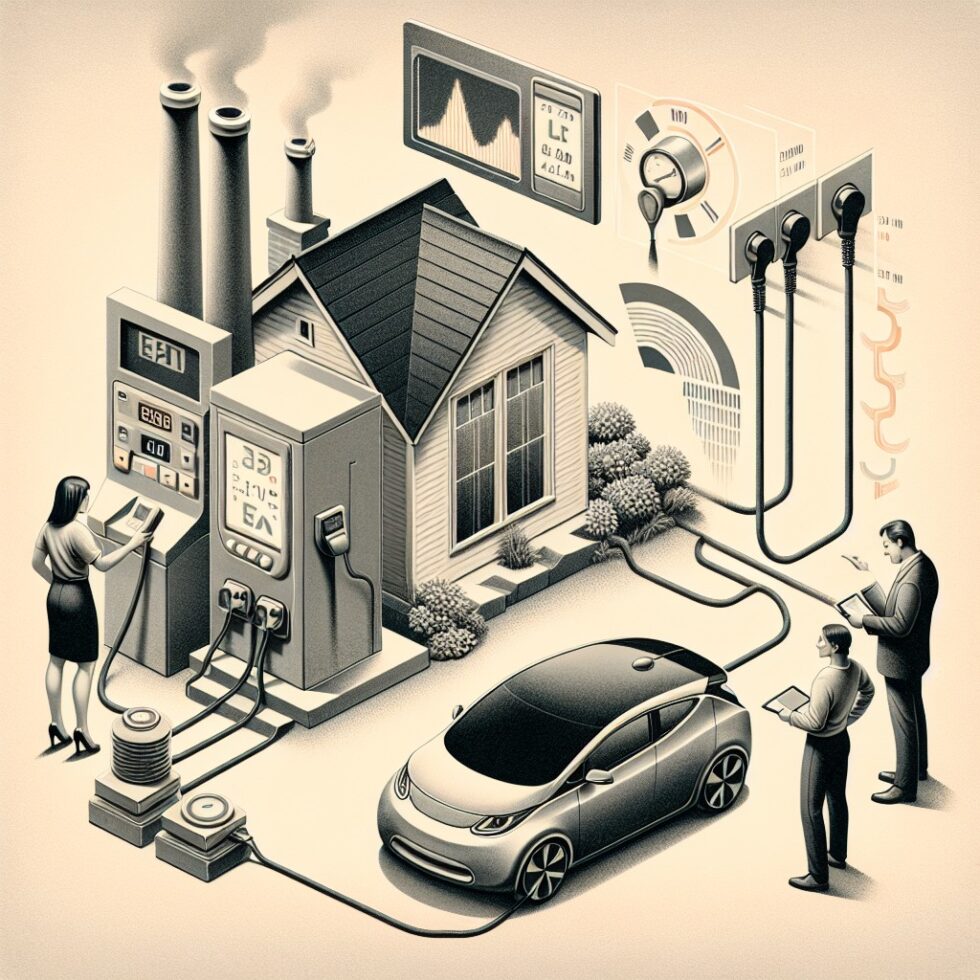
Your electric car holds more energy than most home batteries. In a pinch, it can keep the lights on, the internet up, and the fridge cold. On normal days, it can also help you spend less on electricity. The trick is doing it practically, safely, and without voiding warranties or fighting your utility.
This guide shows what you can do today with vehicle-to-load (V2L) outlets and vehicle-to-home (V2H) systems, how to plan a clean installation, and the math to size runtimes and costs. You do not need to be an engineer—just curious and careful. By the end, you’ll know the parts, the rules that matter, and workflows that hold up in real homes.
Know Your Options: V2L, V2H, and V2G
There are three common ways to use an EV’s battery for more than driving. The right one depends on your goals, budget, and what your vehicle supports.
V2L: Vehicle-to-Load, the Quick Win
Many newer EVs and trucks include built-in AC outlets or an adapter that turns the charge port into a portable outlet. You plug devices straight into the car, or into a heavy-duty extension cord and power strip. This is simple, low cost, and great for outages or outdoor work.
- Good for: Fridge, modem/router, phone chargers, lights, medical devices with modest draw (check your doctor/device manual).
- Not for: Backfeeding your home’s panel. Never connect a car outlet to any home receptacle to “send power back.” That’s unsafe and illegal.
- Typical capacity: 1.8 kW to 3.6 kW on cars; 3.6 kW to 9.6 kW on trucks.
V2H: Vehicle-to-Home, Clean and Code-Compliant
V2H uses a bidirectional charger or inverter and a transfer mechanism to power selected household circuits or the whole home. When the grid fails, the system isolates your home so you don’t backfeed the utility’s lines. When the grid is up, some systems let you “time shift” energy: charge the EV when power is cheap, discharge to your home when it’s expensive.
- Good for: Seamless backup on critical circuits, simple time-of-use savings, and neat wiring.
- Requires: A compatible EV and a certified bidirectional charger plus a transfer switch or smart panel.
V2G: Vehicle-to-Grid, Advanced but Early
V2G lets your car export power back to the grid while connected, often via an approved aggregator. It can support the grid and earn credits. It’s promising, but still limited by standards rollouts, local rules, and automaker policies. Many homeowners start with V2H and add V2G later if the utility supports it.
Compatibility and Standards You Actually Need to Know
Standards sound like alphabet soup, but a few matter in practice. Knowing them keeps you from buying gear that will be obsolete or not permitted.
Connectors and Communication
- CHAdeMO: Older DC fast-charging standard used by the Nissan LEAF. Mature support for V2H in some regions.
- CCS with ISO 15118-20: The new foundation for CCS bidirectional charging. Vehicle and charger must both support this for DC V2H/V2G.
- SAE J1772 (AC): For AC charging. AC V2H requires a charger and EV that can coordinate safely as a grid-tied inverter substitute, often referencing SAE J3072 for interconnection behavior.
Safety and Interconnection
- UL 1741/1741 SA: Certification for inverters used on the grid. Your bidirectional charger should have equivalent grid support certification in your region.
- UL 9741: Covers bidirectional EV charging equipment. Look for this on V2H/V2G hardware in North America.
- IEEE 1547: Grid interconnection rules for distributed energy resources. Your utility and installer will reference this.
- NEC 702: U.S. wiring rules for optional standby systems. It governs transfer equipment and labeling for backup power.
What’s Actually Shipping?
Availability changes fast by region. As of now, many trucks and crossovers offer V2L outlets. True V2H is shipping for specific models and vendors in certain markets, with more coming as ISO 15118-20 rolls out. Always verify your vehicle’s official support and any required approved hardware lists before buying.
Design a System That Fits Your Home
Start with your goal, then choose hardware that meets it. Resist the urge to buy gear before you map your loads and constraints.
Pick Your Backup Style
- Portable (V2L) kit: Extension cords, a small power strip with surge protection, and a watt meter. Lowest cost, manual setup, no permits. Best for renters or occasional outages.
- Critical-load subpanel (V2H): A dedicated panel with essential circuits (fridge, lights, outlets for work gear, network, furnace fan). Requires transfer switch or smart panel. Excellent balance of cost and simplicity.
- Whole-home (V2H): An automatic transfer switch or smart service panel that can handle your full load. Most expensive and needs careful load management to avoid tripping limits.
Right-Size Your Power
Two numbers matter: instantaneous power (kW) and stored energy (kWh).
- Power (kW): The max your system can supply at once. A fridge plus a microwave and a well pump can spike above 4 kW for short periods. Check nameplates and add margin.
- Energy (kWh): The total in your EV battery. Usable capacity is often 85–95% of the sticker size, minus conversion losses of 10–20% for V2H. A 60 kWh pack might yield ~48–52 kWh to your home.
Runtime Math You Can Trust
Rough planning beats wishful thinking. Make a short list of devices and average power:
- Fridge: ~150 W average (600 W bursts)
- Gas furnace fan: ~400 W (electric resistance heat is much higher; heat pumps vary by model and weather)
- Wi‑Fi + modem: ~20 W
- LED lights: ~50–150 W depending on usage
- Phone/laptop charging: ~30–80 W
- Sump or well pump: ~600–1,000 W intermittent
If you hold a 1 kW average over 24 hours, you’ll use ~24 kWh. A 60 kWh EV, with 80% of that realistically usable for backup over a few days (accounting for losses and a driving reserve), can comfortably cover two days. If you can keep average draw near 500 W, you can stretch to ~4 days.
Safety First: Isolation, Neutral, and Ground
Backfeeding is dangerous without proper transfer equipment. A legal V2H installation includes isolation from the grid, correct neutral handling, and ground fault/overcurrent protection. Here’s what to confirm with your electrician:
- Transfer switch or smart panel: It must switch your home off the grid before the EV supplies power. Interlocks are acceptable when installed correctly.
- Neutral switching: Some inverters require a switched neutral; others expect a solidly bonded neutral at one point. Your installer will follow the charger’s manual and local code.
- Labeling and placards: Panels and meters need clear labels for first responders.
- Ventilation and clearances: Chargers and panels have spacing rules. Follow the manual.
For V2L use, treat the car like a generator with extension cords. Use outdoor-rated, heavy‑gauge cords; keep cords dry; avoid daisy chains; and never tie into your panel with a “cheater” cord.
Daily Load Shifting That Won’t Chew Your Battery
You can save money by charging when electricity is cheap and discharging to your home when it’s expensive. The keys are shallow cycles, smart schedules, and a reserve for driving.
Set Simple Rules
- Reserve state of charge: Keep a floor (e.g., 40–60%) so you can leave at any time.
- Shallow cycles: Cycling 5–15% daily is gentler on batteries than deep swings. Many automakers design for this, but check your manual and warranty.
- TOU windows: Program charging during off-peak, discharging during peak. Some systems do this automatically.
- Carbon-aware tweak (optional): If your utility publishes grid carbon intensity, add a rule to avoid discharging when the grid is especially clean.
Battery Health and Warranty
Modern EV packs manage temperature and current to protect themselves. Still, warranties vary. Some brands fully support V2H or V2L; others limit discharging to approved equipment or programs. If you plan to discharge daily, confirm in writing that your setup is supported. Keep firmware updated.
Equipment and Installation: What to Buy and How to Use It
Your shopping list depends on V2L vs. V2H. Keep it boring and certified; your future self will thank you.
If You’re Doing V2L
- Heavy-duty extension cords: 12 AWG or thicker, outdoor-rated. Shorter is better.
- Basic watt meter: Helps you keep loads under the outlet’s rating.
- Load triage plan: Decide which devices you’ll power first. Label the cords and keep them coiled and ready.
- Test run: Practice once a quarter so you’re not learning in the dark.
If You’re Doing V2H
- Bidirectional charger/inverter: Must be compatible with your EV and certified (e.g., UL 9741/1741 SA in North America).
- Transfer switch or smart panel: Automatic is nicer, but a manual interlock is fine and cheaper.
- Critical load panel: Move essential circuits here. Avoid electric ranges and resistance water heaters unless you have very high capacity.
- Permits and inspection: Your electrician will pull these. Keep documentation for insurance and resale.
- Home energy monitor (optional): Helps verify actual usage and spot energy hogs.
Testing and Maintenance
- Monthly quick test: Simulate an outage for 10–15 minutes during daylight. Verify each critical circuit works.
- Label everything: Circuit names, max wattage, and a phone number for your electrician.
- Firmware updates: Keep the charger and vehicle up to date for reliability and new features.
Costs, Savings, and Payback
Costs vary by region and scope. Use these ballparks to budget:
- V2L kit: $50–$200 for quality cords, power strips, and a watt meter.
- V2H critical loads: $4,000–$9,000 for transfer equipment + installation, plus $3,000–$10,000 for a bidirectional charger depending on model and market.
- Whole-home V2H: $8,000–$20,000 for electrical work + charger costs, driven by service upgrades and smart panel choices.
Time-of-Use Savings
If your peak power costs twice your off-peak rate and you shift 5 kWh/day, you could save around $1–$2/day, or $365–$730/year. If you stack this with backup value (avoiding food spoilage or work downtime), the picture improves. In areas with demand response payments or V2G credits, returns can be higher—if your automaker supports it.
Compare to a Stationary Battery
A home battery with ~10–15 kWh usable often lands near $10,000–$15,000 installed. Your EV already holds 5–6 times that energy. If you are already buying the car, V2H can be a better value than adding a dedicated battery. That said, stationary batteries shine when you need always-on backup without keeping a car plugged in, or you want solar self-consumption without EV dependence.
Real-World Workflows That Hold Up
Storm Prep Routine
- 48 hours before: Charge the EV to 80–90%. Update charger firmware if prompted. Check extension cords or test your V2H switchover.
- During the event: Keep average load under 1 kW if possible. Use microwaves and kettles sparingly (short, high spikes).
- After: Recharge during off-peak or when the grid is stable. Note any issues in a log.
Weekday TOU Routine
- Morning: Unplug, drive as needed. Return home with >40% SOC.
- Afternoon peak: If at home, discharge a few kWh to your critical-load panel. Keep SOC above your reserve.
- Overnight: Recharge to your target SOC at off-peak rates.
Apartment and Townhome Tips
If you can’t install V2H, a well-managed V2L kit still protects your essentials. Store cords neatly, plan a safe route for doors/windows, and test your fridge and network ahead of time. Discuss shared charging options with your property manager; even a 120 V outlet can top off your EV after a V2L session.
Limits and Gotchas You Can Avoid
- Heat and cold: Extreme temperatures reduce available power. Precondition the battery if your car supports it, and keep the charger in a temperature-moderated space when possible.
- High-start loads: Devices like well pumps have brief but large inrush currents. Your inverter must handle these surges without tripping. Consider soft-start kits where appropriate.
- EV availability: Whole-home backup works best if the car is usually at home during likely outage windows. If not, prioritize a critical-load panel and keep a small UPS on your modem/router.
- Wiring surprises: Old panels, shared neutrals, or multi-wire branch circuits complicate transfers. Budget time for an electrician to sort them.
- Policy gaps: Some utilities have not documented V2H/V2G pathways yet. Keep your system as “non-export” unless your utility approves exporting.
Insurance, Permits, and Paper You Should Keep
Insurers like documented, inspected systems. So do home buyers and future you.
- Permits and inspection sign-offs: File them with your home records.
- Charger and panel manuals: Keep a digital and paper copy handy.
- One-page system diagram: Show the service meter, main panel, transfer gear, critical-load panel, charger, and EV. Tape it near the panel.
- Utility paperwork: If you export, you’ll have an interconnection agreement. If you’re non-export but grid-interactive, document that too.
Future-Proofing Without Overpaying
Bidirectional charging is evolving fast. To avoid regrets:
- Favor standards-ready gear: Look for a public roadmap to ISO 15118-20 support and field-upgradable firmware.
- Use modular panels: A critical-load subpanel lets you start small and grow later.
- Plan conduit and space: Leave room on the wall and in the panel for future hardware.
- Keep your EVSE on Ethernet: Wi‑Fi is fine, but wired beats wireless for stability and updates.
Checklist: From Idea to Reliable Power
- Confirm your EV supports V2L or V2H with approved gear.
- Decide: portable V2L kit, critical-load V2H, or whole-home V2H.
- List and measure your critical loads; target 300–1,500 W average.
- Pick certified equipment and a licensed electrician.
- Pull permits, install, and label everything cleanly.
- Run a test every month; keep a simple log.
- Set TOU schedules and an SOC reserve you’re comfortable with.
Summary:
- V2L is the easiest way to power essentials; V2H provides seamless, code-compliant backup and smart shifting.
- Check standards and certifications: ISO 15118-20/CCS for bidirectional DC, UL 9741/1741, IEEE 1547, and NEC 702.
- Right-size both power (kW) and energy (kWh). A 60 kWh EV can cover days of critical loads with care.
- Use proper isolation and transfer equipment. Never backfeed through a receptacle.
- Daily TOU shifting works best with shallow cycles and a comfortable SOC reserve.
- Budget realistically: V2L is cheap; V2H costs more but can beat a stationary battery on value.
- Test regularly, keep paperwork, and plan for firmware updates and future standards.
Related Reading
- turning your EV into home power — related guide.