

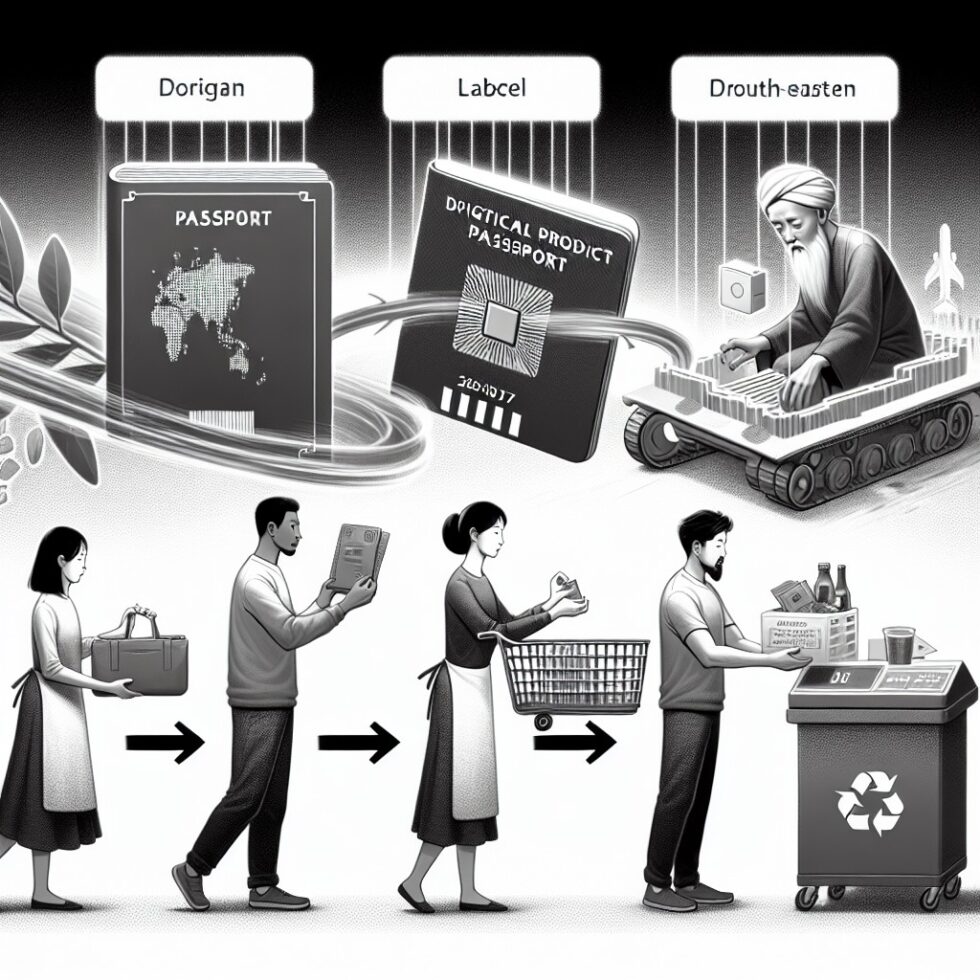
Why Digital Product Passports Are Moving From Slide Decks to Shop Floors
Digital product passports (DPPs) are leaving whitepapers and entering packaging lines. Regulations in Europe are setting schedules for categories like batteries and textiles. Retailers want more trusted origin and care info to cut returns. Recyclers want clean material data to unlock higher-value recovery. Consumers want reliable repair help, not a hunt across forums. If you build or sell physical goods, you will be asked for a DPP—soon.
This article shows a practical way to ship a DPP that survives real-world handling. No moonshots. You will learn how to select identifiers, choose a scannable carrier, shape a minimal but useful data model, plan access control, and run a pilot that touches manufacturing, stores, service centers, and end-of-life partners. We’ll focus on the smallest system that delivers value today and scales with rules that are still evolving.
What a DPP Actually Is (And Isn’t)
A DPP is a product-bound record with enough standardized, tamper-evident data to support the product’s entire lifecycle. It is not your full PLM database, not a marketing micro-site, and not just a QR code. The passport links a unique product identity (the item in your hand) to curated claims about that item’s origin, materials, serviceability, and safe end-of-life.
Don’t try to cram every fact into the on-pack code. The code is a pointer to structured data. You can embed a few tiny essentials for offline use, but keep the rest server-side, versioned, and signed.
Build the Identifier Stack First
All the useful features of a DPP—recall precision, repair history, deposit tracking, verified recycling—depend on clean, persistent IDs. Start here before you print anything.
Core pieces
- Product class ID (e.g., GTIN): Identifies the model or variant family.
- Item serial number: Identifies this exact unit.
- Digital link URL: A resolvable URL encoding both class and, optionally, serial; supports actions like “info”, “support”, or “recycle”.
- Internal ID mapping: Your ERP, PLM, and PIM need a stable map to the public ID.
Use GS1 Digital Link to encode the class and serial in a URL that scanners already understand. It’s flexible, supported in major retail tooling, and keeps you compatible with evolving DPP formats.
Choose Carriers That Survive the Lifecycle
You often need more than one physical carrier on the product and packaging, because different environments break them in different ways:
- QR or Data Matrix: Best for consumer and store scanners; cheap to print; works at arm’s length.
- NFC tag: Useful for sealed products or high-value goods; enables quick taps and signed origin at the edge.
- Permanent plate or etching: For items likely to lose packaging (textiles, tools, appliances). Consider a laser-etched Data Matrix plus a backup alphanumeric code.
Print at least two carriers in distinct locations. Assume one will be scuffed off or covered by a label. Pick adhesives that tolerate heat, humidity, and cleaners relevant to your product’s reality.
Design a Minimum Useful Data Model
Don’t attempt the grand schema first. You’ll miss your window and frustrate partners. Start with a small, stable core claim set and add optional layers as regulations or partners demand them.
Recommended core claims (Phase 1)
- Identity: GTIN, serial, batch/lot (if relevant), manufacturing date, country of origin.
- Materials snapshot: A short list of major materials by mass percentage (e.g., aluminum 60%, ABS 20%, copper 10%, other 10%).
- Safety and care: Service intervals, safe disassembly notes (high-level), repair warnings.
- Regulatory references: Applicable directives or compliance marks (links to official declarations).
- Support endpoints: Warranty status lookup, parts catalog link, repair network finder.
Valuable add-ons (Phase 2)
- Repairability score with the scoring rubric or link.
- Firmware/software bill of materials (SBOM) for connected devices, with CVE update feed.
- Environmental claims: Product-level carbon footprint methodology and footprint number; recycled content with chain-of-custody reference.
- Deposit/return: If your category supports it, link to deposit status and return instructions.
- Refurb history: If the unit has been refurbished, include a timestamped, signed record.
Versioning and change history
Every passport needs immutable versions. Never silently overwrite claims. When info changes—say you publish a new service advisory—create a new version, sign it, and keep older ones viewable with clear deprecation notes. This change history is essential for recalls, audits, and trust.
Make Trust Verifiable, Not Just Plausible
A DPP isn’t just a webpage. Its claims need authenticity and integrity checks. You do not have to reinvent cryptography to get there.
- Sign your claims: Sign each issued DPP version server-side. Publish your public keys in a stable location and rotate keys on a schedule.
- Bind the ID to the signature: Include the GTIN, serial, and version in the signed payload. Partial data should not verify.
- Use standard containers: Current ecosystems often rely on JSON-based credentials. Keep your structure simple, reference standard vocabularies, and avoid exotic encodings that partners can’t parse.
- Decentralized or centralized? You can start centralized, then move toward verifiable credential flows as partners request them. Design your keys and revocation approach now to avoid pain later.
Access Control: Who Sees What
Much of a DPP is public by design: care instructions, major materials, regulations. Some data, like supplier-level composition or internal test reports, may be restricted. You need an access plan that keeps consumer scans simple while allowing partners to see more.
Three-tier model works well
- Public: Consumer-usable info. No login. No tracking beyond basic rate-limits.
- Partner: Retailers, repairers, recyclers. Access via API keys or federated identity. Rate-limited. Logically segmented.
- Confidential: Supplier confidential or competitive info. Shared only under contracts and time-limited tokens.
Don’t bury the QR behind an app requirement. Let the default web view be fast, clean, and safe. Partners can flip a toggle to reveal more when authenticated. Keep the UI consistent across roles, so your support team can guide anyone through the same steps.
Plan for Offline Use
Recyclers, field repairers, and warehouse staff often operate with spotty connectivity. If scanning a code yields a blank page, your DPP is failing at the moment it matters most.
- Short offline payload: Embed a minimal set of claims directly in the QR/NFC payload—like identity, safety flags, and a recent timestamp—so a generic reader shows something useful even without network.
- Local caches: Ship a small, auto-updating cache of the claims most relevant to your partners’ SKUs on their handhelds.
- Printable fallback: Include a printed summary inside packaging for core safety and disassembly notes. It’s not elegant, but when the scanner dies, paper saves the day.
Scannable Experiences That People Don’t Hate
Getting the tech right is half the job. The other half is making the mobile page readable and fast.
- Three tabs only: “About,” “Care,” and “End of Life.” Put warranty and parts under “Care.” Put legal under “About.”
- Fast first paint: Load the core claims first. Defer analytics. A 2G connection should show basics in under 2 seconds.
- Big affordances: Large buttons for “Find a Repairer,” “Order a Part,” and “Recycle Near Me.”
- Language auto-detect: Use the browser’s language; show a switcher. Don’t geofence content.
Data Plumbing: Where the Passport Lives
You need one source of truth for each DPP, regardless of how many distribution systems you have. Consider a simple architecture:
- Issuer service: Produces signed DPP versions when products are created or updated. Writes to a versioned store.
- Resolver: Accepts scans (Digital Link URLs), figures out role and locale, and returns the right view.
- Partner API: Authenticated endpoints for bulk lookups, audits, and lifecycle events (repair, refurbish, recycle).
- Events bus: Records state changes: sold, registered, repaired, refurbished, recycled.
Tie the issuer to your PLM/ERP so it updates with new batches and to your PIM for description text. Use a simple schema and map to whatever the regulation demands later. You are building a pipeline, not a one-off page.
Lifecycle Events: Where Value Appears
The DPP’s value compounds when events are written back to it. Here’s where that matters:
Point of sale
- Register purchase (opt-in): Links the unit’s serial to the buyer’s proof of purchase in a privacy-safe way.
- Warranty start: Auto-activate with sale timestamp; simple for buyers, reduces support tickets.
Repair and parts
- Check compatibility: Scan the unit, then a part. The system validates the pairing and updates the DPP with the part change.
- Service notes: Keep them short and standardized. Think “Replaced pump module v2.1, 14 min; leak test pass.”
Refurbishment
- Wipe and reissue: Record refurbishment as a new, signed DPP version. Show it proudly to buyers in second-hand channels.
- Graded condition: Link to clear grading criteria. Avoid vague terms like “like new.”
End-of-life
- Deposit return: If applicable, the DPP proves eligibility and prevents fraud with serial and version checks.
- Disassembly cues: Use iconography and simple steps. The goal is fewer minutes and fewer injuries on a busy line.
- Material confirmation: Trustworthy composition data unlocks higher-value recovery and better sorting.
Interoperability Without the Headache
Several standards are in motion. Anchor to those that already see adoption:
- GS1 Digital Link for IDs and scanner-friendly URLs.
- Verifiable credential formats for signed claims, extending as partners require.
- Open APIs with clean pagination and rate limits. Publish schema and examples. Keep auth simple (mutual TLS or signed tokens).
Don’t leap to a blockchain unless a partner explicitly demands it and can operate it. Signatures and auditable logs usually meet assurance needs with far less friction.
Compliance Readiness: Design For Change
EU rules such as the Ecodesign for Sustainable Products Regulation point to DPPs. Category-specific acts (like batteries) set concrete details first. Expect templates to evolve for textiles, electronics, and furniture.
- Design for deltas: Make it easy to add or deprecate fields per category.
- Keep audit trails: Store signed snapshots of what you showed the public on date X.
- Manage keys: Rotate, revoke, and publish key info on a predictable schedule.
Your 90‑Day Pilot
Pilots fail when they’re too abstract. Pick one product line, two retail channels, one service partner, and one recycler. Get all four in the loop.
Week 1–2: Scope and IDs
- Pick the SKUs and geographies.
- Map ERP/PLM IDs to GTIN + serial; stand up a staging resolver.
- Draft your core claim set. Write dummy examples.
Week 3–4: Labels and mobile
- Print sample QR/Data Matrix labels and one NFC tag option.
- Build the mobile “About/Care/End of Life” view.
- Decide the offline payload fields and test on low-end phones.
Week 5–6: Signing and events
- Add claim signing and a public key endpoint.
- Implement purchase registration and simple service event logging.
- Create a recycler view with materials and disassembly cues.
Week 7–8: Field tests
- Ship 50–200 labeled units through real stores and a small e‑commerce batch.
- Give handheld scanners to service and recycling partners.
- Log scans, time-to-info, and error reasons.
Week 9–10: Fixes
- Fix label adhesion, UI latency, and scan misreads.
- Refine event posting flows and reduce required clicks.
- Tune offline cache size for partners.
Week 11–12: Review
- Publish a pilot report: what worked, what broke, and your next three upgrades.
- Lock a rollout plan by category and region.
Budget, Vendors, and Build vs Buy
Costs cluster around printing, hosting, and integration. Most teams can start lean:
- Printing: You’ll add a new QR/Data Matrix on packaging and a more durable label on the product. NFC adds hardware cost; test ROI on high-value lines first.
- Hosting: A small cloud service can handle millions of scans cheaply if pages are static-rendered and cached.
- Integration: Your time sinks will be ID mapping and event plumbing with ERP/PIM.
When evaluating vendors, ask for:
- GS1 Digital Link support, including serial-level URLs and action switching.
- Signed-claim issuance with key management.
- Role-based views and offline payload options.
- Clear SLAs for resolver uptime and scan latency.
Privacy Without Dark Patterns
Your DPP can be privacy-preserving and still useful. Default to no tracking for public scans. Only request personal data when needed (e.g., warranty) and tell users why. Partner scans should be authenticated and minimize personal data handling. Publish a short, plain-language data policy on the DPP page itself.
Common Pitfalls (And Simple Fixes)
- Pitfall: Only one label type that wears off. Fix: Two carriers in different locations, with a permanent option on unit.
- Pitfall: Bloated pages that time out in warehouses. Fix: Static-render essentials, defer the fancy stuff.
- Pitfall: Unverifiable claims. Fix: Sign every version, publish keys, and support lightweight verification.
- Pitfall: All-or-nothing data access. Fix: Three-tier model and clear toggles in the UI.
- Pitfall: No event write-back. Fix: Start with two events (warranty start, part replacement) and expand.
KPIs That Matter
Track success with a small set of measurable outcomes rather than vanity scan counts:
- Time-to-info: Median time from scan to readable essentials (goal: under 2 seconds on a 3G link).
- Support deflection: Reduction in basic “how to” tickets for the pilot SKUs.
- Repair throughput: Minutes saved per job after introducing DPP-guided parts and notes.
- Recycling yield: Percentage of units reaching the right end-of-life stream; improved material value recovery.
- Data completeness: Percentage of units with signed, versioned passports and at least two lifecycle events recorded.
A Note on Deposits and Secondary Markets
Deposit-return and recommerce benefit directly from DPPs. A secure serial + signature prevents fake returns. Refurbishers can enrich a unit’s DPP with grading notes and parts changes, which increases buyer confidence. For marketplaces, a verified DPP link is a trust signal that beats fuzzy product descriptions.
Scale Out in Layers
As you expand beyond a pilot, scale in layers rather than flipping one giant switch:
- Layer 1: All SKUs get a Digital Link and a public “About/Care/End of Life” view.
- Layer 2: High-volume SKUs add signed claims, service events, and partner API.
- Layer 3: High-value or regulated SKUs add NFC, SBOM, deposit tracking, and richer end-of-life guidance.
What Good Looks Like
A well-executed DPP feels boring—in the best way. You scan any unit, anywhere, and immediately see accurate basics. A repair tech gets parts compatibility and a two-line note. A recycler sees the top three materials and a clear hazard cue. The brand gets fewer support calls, fewer counterfeit returns, and better compliance posture. And the planet gets more reuse and less waste.
Summary:
- Anchor your DPP on persistent IDs using GS1 Digital Link, with both class and serial encoded.
- Use at least two physical carriers (e.g., QR and an etched Data Matrix) so one scan path always survives.
- Start with a small, signed core claim set and add fields as regulations and partners demand.
- Offer simple, fast public pages; gate advanced details with a three-tier access model.
- Plan for offline: embed a tiny payload, ship caches to partners, and include a printed fallback.
- Record lifecycle events—warranty start, repairs, refurbish, recycle—to turn the DPP into a living asset.
- Measure time-to-info, support deflection, repair throughput, recycling yield, and data completeness.
- Scale in layers across your catalog rather than one big bang.