

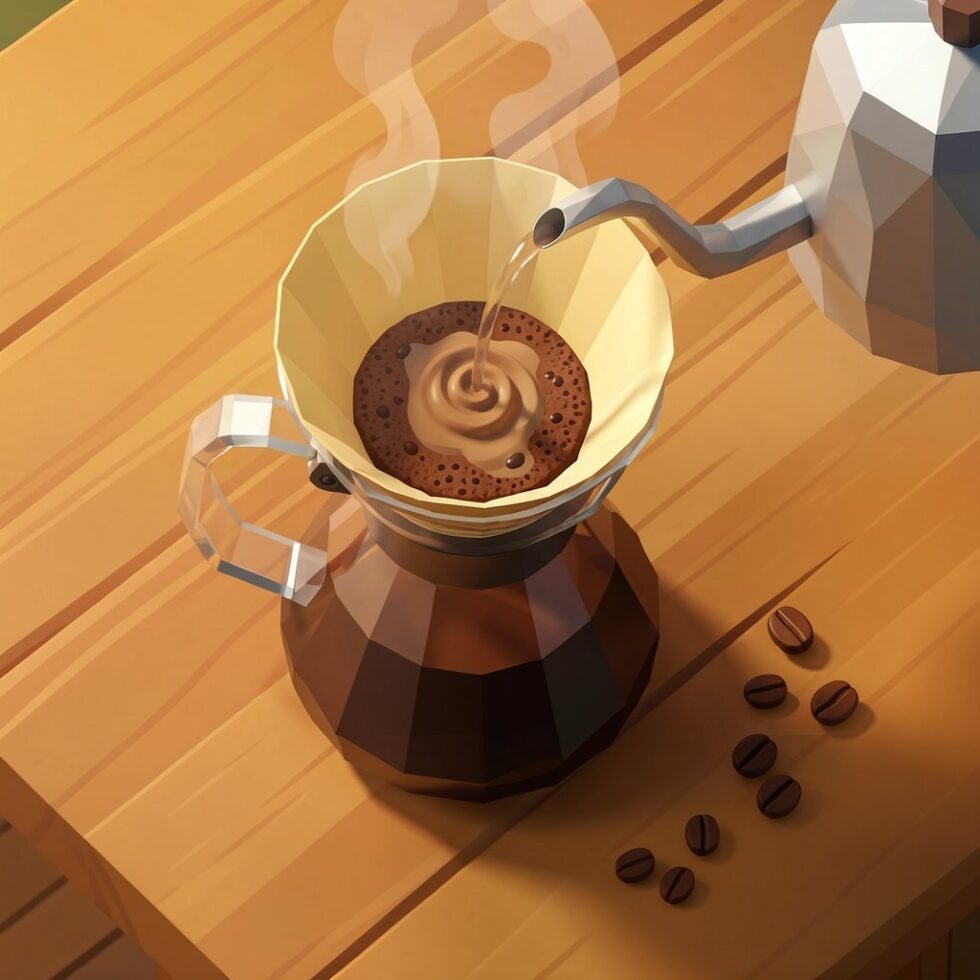
Most people treat a cup of coffee as a small daily ritual: press a button, wait, drink. The difference between a flat, bitter cup and a bright, sweet one, however, is not luck. It is chemistry. Every cup is the result of a controlled extraction, a process in which hot water dissolves a fraction of the roasted bean and carries those compounds into your mug. Understand a handful of variables, and you can make better coffee at home with the equipment you already own.
This guide explains the science behind the cup: what extraction actually measures, why water chemistry matters more than most people think, how grind size changes flavor, and which mistakes quietly ruin a brew. No jargon for its own sake, no gear worship. Just the mechanisms, with numbers you can use tomorrow morning.
What Extraction Really Means
When hot water meets ground coffee, it does not wash the bean. It selectively dissolves soluble compounds: organic acids, sugars, caffeine, melanoidins, and aromatic oils. The insoluble material, mostly cellulose and other structural fibers, stays behind in the filter or the portafilter. Brewing is the art of dissolving the right proportion of the soluble mass, at the right rate, in the right balance.
Two numbers describe the result, and confusing them is the most common mistake in home brewing. The first is strength, measured as Total Dissolved Solids (TDS): the percentage of the liquid in your cup that came from the coffee. A typical filter coffee sits around 1.2 to 1.4 percent TDS, which means the cup is more than 98 percent water. Espresso is much stronger, often 8 to 10 percent TDS, yet it is still mostly water. TDS tells you how concentrated the cup is, not how well it was extracted.
The second number is extraction yield: the percentage of the dry coffee grounds that ended up dissolved in the liquid. If you brew 20 grams of coffee and 4 grams of soluble material ends up in the cup, the extraction yield is 20 percent. Yield describes how much of the bean you pulled out; TDS describes how strong the result is. A strong cup can still be badly extracted, and a weak one can be perfectly extracted. The two are linked by the brew ratio, the amount of coffee relative to water.
The Brewing Control Chart: Where Good Coffee Lives
The Specialty Coffee Association (SCA) has spent decades turning tasting experience into a map. The Brewing Control Chart plots strength on one axis and extraction yield on the other, and the target zone is remarkably consistent across methods: roughly 18 to 22 percent extraction yield at 1.15 to 1.35 percent TDS for filter coffee. Within that window, most tasters find the cup balanced: sweet, acidic enough to be lively, and free of harsh bitterness.
Below about 18 percent yield, the coffee is under-extracted. The acids that dissolve early dominate, and the cup tastes sour, thin, and hollow. Above about 22 percent, the later-dissolving compounds take over: bitter phenolics, astringent tannins, and the dry, woody notes that come from over-pulling the grounds. The chart is not a law of nature, and some roasts taste better slightly outside the box, but it is an excellent diagnostic. When a cup tastes off, the chart tells you which direction to move: finer grind or longer contact time to raise yield, coarser grind or shorter time to lower it.
For home brewers, the practical takeaway is simple. If your coffee tastes sour, you are probably under-extracting: grind finer, use hotter water, or brew longer. If it tastes bitter and dry, you are probably over-extracting: grind coarser, cool down slightly, or shorten the brew. Taste is the instrument; the chart is the map.
Water: The Silent Variable
Of all the variables in brewing, water chemistry is the one people ignore most, and it acts on every other variable at once. Water is not a passive solvent. Its dissolved minerals govern which flavor compounds leave the grounds, how fast they leave, and how they are perceived once in solution. You can own a calibrated grinder and a precise kettle and still make a disappointing cup if the water is wrong.
The SCA water quality targets, published in its Water Quality Handbook, are a useful reference. Total hardness, mostly calcium and magnesium, should sit around 50 to 175 parts per million (ppm) as calcium carbonate. Alkalinity, the buffering capacity provided mainly by bicarbonate, should be around 40 to 75 ppm. Total dissolved solids in the water itself should be roughly 150 ppm. These numbers matter because calcium and magnesium are extraction agents: they help pull flavor compounds out of the grounds. Bicarbonate, by contrast, buffers acidity, and too much of it flattens the bright, fruity notes that make specialty coffee interesting.
Distilled or reverse-osmosis water, which many people assume is the purest choice, actually underextracts. With no minerals to assist the process, the water pulls less flavor from the grounds, and the cup comes out flat and weak. Very hard water, on the other hand, can over-extract and leave a chalky, bitter residue. The fix is not exotic. The Barista Hustle recipe, a well-known DIY approach, mixes Epsom salts (magnesium sulfate) and baking soda (sodium bicarbonate) into deionized water to hit a target profile. A simpler version for most homes: if your tap water is very soft, a pinch of minerals helps; if it is very hard, a simple filter or a blend with bottled water moves you toward the target zone.
Grind Size and Particle Distribution
Grind size is the most direct lever a home brewer controls, and the reason is surface area. Smaller particles expose more surface to the water, so extraction happens faster. Larger particles extract slowly. A consistent grind, with particles of similar size, means the whole bed extracts at a similar rate. An inconsistent grind means some particles over-extract while others under-extract, and the cup tastes bitter and sour at the same time.
This is why burr grinders beat blade grinders. A blade grinder chops coffee with a spinning blade, producing a chaotic mix of dust and whole chunks. A burr grinder crushes the beans between two ridged surfaces set at a fixed distance, producing particles that are much more uniform. The difference is measurable: blade grinders generate a wide particle size distribution with a large share of fines, the ultra-small particles under about 200 microns that clog filters and over-extract quickly. Burr grinders, even entry-level ones, shift the distribution toward a narrow peak around the target size.
Fines deserve special attention. They extract almost instantly, and they are the main source of the muddy, astringent bitterness in poorly ground coffee. A good grinder reduces them; a good technique avoids stirring them into the slurry. If you are still using a blade grinder, upgrading to even a modest burr grinder is the single highest-impact change you can make to your coffee, larger than any kettle or scale upgrade.
Temperature: The 90 to 96 Degree Window
Hot water extracts faster than cold water, and the commonly cited brewing window is 90 to 96 degrees Celsius (195 to 205 degrees Fahrenheit). Within this band, water dissolves the full spectrum of desirable compounds at a rate and in a balance that most tasters find pleasant. Brew above it and the risk of over-extraction climbs sharply; brew well below it and the cup turns sour and thin.
The science, however, is more nuanced than the folklore. A 2020 study published in Scientific Reports brewed drip coffee at 87, 90, and 93 degrees Celsius, adjusting grind size and brew time to hold strength and extraction yield constant. The result surprised many: at fixed strength and extraction, brew temperature had little impact on the sensory profile. Temperature matters because it changes extraction speed, but grind size and contact time can compensate. The practical lesson is that temperature is a tuning knob, not a magic switch. If your brewer holds a stable temperature anywhere in the 90 to 96 range, chasing the last degree is not where your flavor problems live.
Altitude adds one more wrinkle. Water boils at lower temperatures at high elevation, so brewers in Denver or Mexico City cannot reach the same extraction temperatures as brewers at sea level. The fix is to compensate with a finer grind or a longer brew, not to fight the physics.
Freshness and Storage: The Clock You Cannot Reset
Roasted coffee is a perishable product, and its flavor declines along a predictable curve. Freshly roasted beans release carbon dioxide for days after roasting, a process called degassing. Brewing too early, before the gas has escaped, produces a flat, lifeless cup because the CO2 interferes with extraction. Most roasters recommend resting beans for a few days after the roast date before brewing, and espresso often benefits from a week or more.
After the peak, oxidation takes over. Oxygen strips volatile aromatics first, then sweetness, and the coffee slowly turns stale. Four enemies accelerate the slide: oxygen, light, heat, and moisture. The storage rules follow directly: keep beans in an airtight, opaque container, in a cool, dry place, and buy in quantities you will use within a few weeks. Freezing can extend life for bulk storage, but only in airtight portions, and only if you grind from frozen without thawing and refreezing. Storage does not reset the freshness curve; it only slows the slide.
Choosing a Brewing Method: A Practical Comparison
Every method is a different set of trade-offs between the same variables: grind size, ratio, temperature, and contact time. The table below summarizes the most common home methods.
| Method | Grind | Ratio (coffee:water) | Contact time | Character |
|---|---|---|---|---|
| Espresso | Fine | 1:2 | 25-30 s | Dense, syrupy, intense |
| Pour-over (V60) | Medium-fine | 1:16 to 1:17 | 2.5-4 min | Clean, bright, tea-like |
| French press | Coarse | 1:15 to 1:16 | 4 min | Full-bodied, heavier mouthfeel |
| AeroPress | Medium-fine | 1:15 to 1:16 | 1-2 min | Versatile, forgiving |
| Moka pot | Medium-fine | 1:7 to 1:8 | 3-5 min | Strong, bold, close to espresso |
| Cold brew | Coarse | 1:8 to 1:10 | 12-24 h | Smooth, low acidity |
The golden ratio for filter coffee, roughly 60 grams of coffee per liter of water, or about 1:16 to 1:17 by weight, is a reliable starting point. Weighing your coffee and water, rather than using scoops and cups, removes the largest source of day-to-day inconsistency. A cheap digital scale is the second-best investment you can make, right after a burr grinder.
Common Mistakes That Ruin a Cup
Most bad coffee at home comes from a small set of repeatable errors. Fix these before buying any new equipment.
- Using stale beans. Coffee peaks within weeks of roasting. Check the roast date, not the sell-by date, and buy smaller bags more often.
- Grinding too far ahead. Ground coffee stales dramatically faster than whole beans because it exposes far more surface area to oxygen. Grind immediately before brewing.
- Ignoring the ratio. Guessing the amount of coffee produces wildly inconsistent cups. Weigh both coffee and water until the habit sticks.
- Brewing with bad water. Distilled water underextracts; very hard water over-extracts. If your tap water tastes odd, your coffee will too.
- Chasing temperature instead of grind. Within the 90 to 96 degree window, grind size and contact time matter more than the last degree of heat.
- Over-stirring or over-agitating. Aggressive stirring pushes fines into the filter and extracts harsh bitterness. Gentle, even saturation is enough.
Frequently Asked Questions
What is the difference between strength (TDS) and extraction yield?
Strength, or Total Dissolved Solids (TDS), is the percentage of the liquid in your cup that came from the coffee, telling you how concentrated the cup is. Extraction yield is the percentage of the dry coffee grounds that ended up dissolved in the liquid, describing how much of the bean you pulled out. A strong cup can still be badly extracted, and a weak one can be perfectly extracted.
Why does water chemistry matter for coffee extraction?
Water is not a passive solvent; its dissolved minerals govern which flavor compounds leave the grounds, how fast they leave, and how they are perceived. Calcium and magnesium act as extraction agents, while bicarbonate buffers acidity, and too much of it flattens bright, fruity notes. Distilled or reverse-osmosis water underextracts because it lacks minerals, while very hard water can over-extract and leave a bitter residue.
How does grind size affect extraction, and why are burr grinders better?
Grind size changes surface area: smaller particles extract faster, larger ones slower, so a consistent grind ensures the whole bed extracts at a similar rate. An inconsistent grind, like that from a blade grinder, produces a mix of dust and chunks, causing some particles to over-extract while others under-extract. Burr grinders crush beans between ridged surfaces, producing more uniform particles and fewer fines, which are the main source of muddy, astringent bitterness.
What should I do if my coffee tastes sour or bitter?
If your coffee tastes sour, you are probably under-extracting, so grind finer, use hotter water, or brew longer. If it tastes bitter and dry, you are likely over-extracting, so grind coarser, cool down slightly, or shorten the brew. Taste is the instrument, and the Brewing Control Chart helps you decide which direction to move.
Summary
- Brewing is selective extraction: hot water dissolves soluble compounds from roasted grounds, and the goal is a balanced yield, roughly 18 to 22 percent, at a strength around 1.15 to 1.35 percent TDS.
- Water chemistry is the hidden variable. Target about 50 to 175 ppm hardness and 40 to 75 ppm alkalinity; distilled water pulls too little flavor, and very hard water pulls too much.
- Grind consistency beats grind fineness. Burr grinders produce uniform particles; blade grinders produce fines that over-extract and taste bitter.
- Temperature matters through extraction speed, not magic. Within 90 to 96 degrees Celsius, grind and time can compensate, as the 2020 Scientific Reports study showed.
- Freshness is a clock: rest beans a few days after roasting, then store them airtight, opaque, cool, and dry, and use them within weeks.
- Weigh your coffee and water. The golden ratio for filter is about 60 grams per liter, and consistency is the fastest path to better cups.
External References
- Nordic Brew Lab: Coffee Extraction Explained (TDS and Extraction Percentage)
- Coffeester: Brewing Coffee, Extraction and the SCA Brewing Control Chart
- Scientific Reports: Brew Temperature at Fixed Strength and Extraction (2020)
- Barista Hustle: DIY Coffee Water Recipe
- Coffeester: Water for Coffee, TDS, Hardness and the SCA Water Standard
- Iluminar Coffee: Brewing Extraction Theory
- Scott Rao: How to Choose a Dose and Brewing Ratio
- Counter Culture Coffee: Deep Dive on Grinder Burrs
- Coffeester: Brew Temperature and the 90-96 Degree Window
- Day9 Coffee: How to Store Coffee Beans Without Killing Freshness
Related Reading
- making your tap water safer — related guide.
- stop water damage before it starts — related guide.